

Why glass streaks in heat
A streak is leftover. Some cleaner, some dissolved minerals or some lifted dirt stayed on the glass instead of leaving with the water. In cool weather you have time to wipe the whole pane before anything dries. In Valley heat you do not.
Glass in direct summer sun gets hot enough to flash-dry a wet pane in seconds. The water leaves, the soap and minerals stay, and the squeegee then drags them across the pane in lines. Dusty glass makes it worse, because the dirt turns into a thin mud that smears instead of lifting.
So the first fix is not a better product. It is a cooler pane.
If the glass is hot to the touch, the cleaner will dry before you can wipe it.
Timing: shade, morning, after monsoon
Work the shaded side of the house first. Glass that has been in shade all morning stays cool and gives you a long working window. Follow the shade around the house as the sun moves.
Early morning is the best time for the sunny sides. Start as soon as the light is up, before the glass warms. By late morning in most of the year, east and south glass is already too hot to work.
After a monsoon storm, wait for the pane to dry and dust off the loose grit first. Storm residue is a mix of fine dust and mineral spotting. Wiping it wet and gritty is how panes get scratched and streaked at the same time.
Touch the glass with the back of your hand before you start. If it feels warm, move to another window or wait.
How to clean outside windows: squeegee technique step by step
A squeegee with a clean, sharp rubber blade does the work. Most streaks are a technique problem, and technique is easy to learn. You need a bucket of water with a few drops of dish soap, a scrubber or soft sponge, a squeegee that fits the pane, and a dry microfiber cloth.
First, remove loose dust with a dry brush or a damp cloth so you are not turning grit into paste. Second, wet the whole pane with the soapy water and scrub it, including the corners. Third, start a dry squeegee stroke along the top edge to make a clean dry line, then pull the blade down in one steady pass from top to bottom.
Wipe the blade on a cloth after every stroke. This is the step people skip, and it is the one that matters most. A blade carrying dirty water puts the dirt right back on the glass.
Overlap each pass by about an inch so you never leave a thin vertical stripe. Finish by wiping the edges and the frame with the dry microfiber, because water collects there and runs back down onto clean glass.
- Dirty blade: wipe it after every stroke.
- Too much soap: a few drops is enough, and extra soap leaves haze.
- Hot glass: move to shade or wait.
- Nicked rubber: replace the blade, since a damaged edge leaves a line on every pass.
Solutions that work, and ammonia myths
Plain soapy water works well on most outside glass. The soap helps the squeegee glide and loosens the film, and the squeegee takes it all off. You do not need a bottle of specialty spray for ordinary dust.
Many people reach for an ammonia-based spray because it feels strong. In heat it dries very fast, which is exactly what you do not want on a warm pane. It can also be harsh on window tint film and some coatings, so check what your glass has before you use it. For most homes, soap and a squeegee beat any spray bottle.
If you still see a hazy film after a careful wash, the cause may not be streaks. Sprinkler overspray leaves mineral deposits that do not wipe off with soap. Our guide on removing hard water stains explains how to tell the difference.
When DIY stops making sense
Ground-level windows are a good weekend job. The trouble starts when the glass is out of reach, or when the method that works on one pane keeps failing on the next.
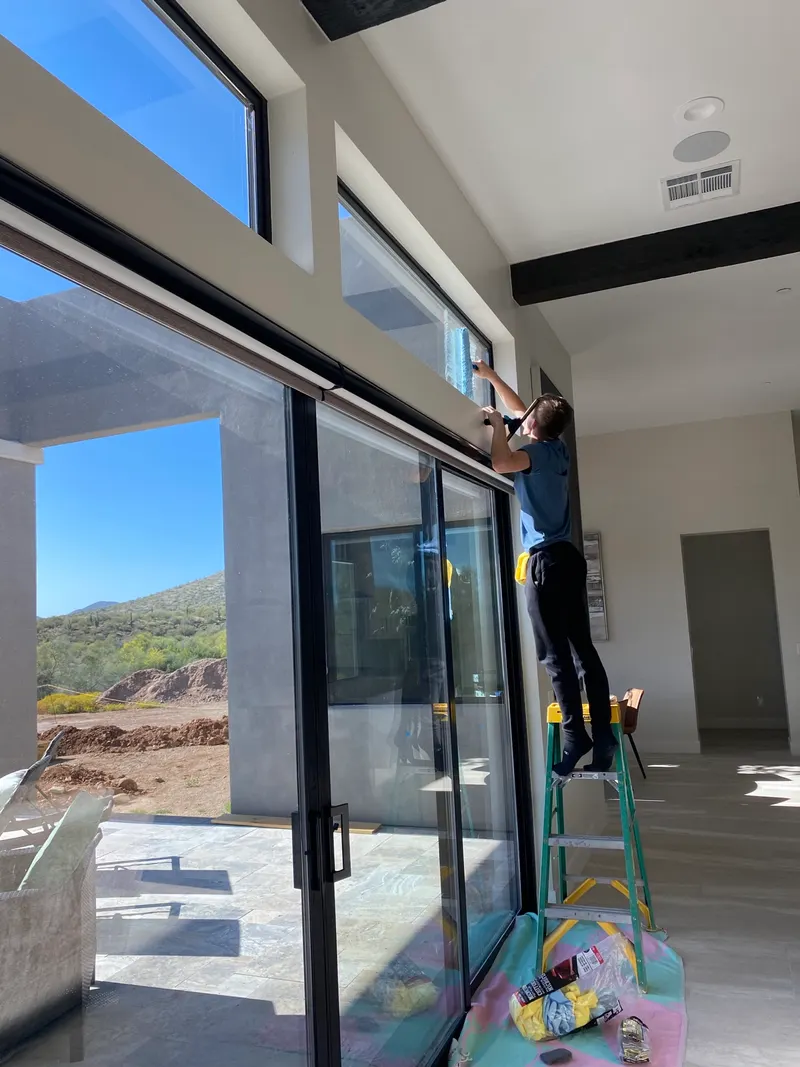
Second-story glass means a ladder, and a ladder with a wet squeegee on stucco or tile is a fall risk. Large sliders and tall fixed panes are hard to wipe in one clean pass. Panes in full afternoon sun, such as west-facing walls and pool-side glass, may never stay cool enough for a clean finish.
Hard water is the other point. If the glass is clear when wet and cloudy when dry, you are dealing with minerals, and no amount of squeegee technique will fix that. That needs treatment, which our exterior window cleaning crew handles when a quote shows it.
For homes across Phoenix, the Phoenix window cleaning page explains how a visit runs. If you want to know which spray or aerosol cleaners work on outside glass, read our take on the best aerosol glass cleaner for outdoor windows. When you would rather hand it off, tell us about the glass and we text your quote back.
Get instant quote and we will plan the visit around the sun.
Key takeaways
- Glass streaks when cleaner dries before it is wiped.
- Work in shade or early morning, never on hot glass.
- Wipe the squeegee blade after every stroke.
- Soapy water usually beats strong sprays in heat.
- Cloudy-when-dry glass is minerals, not streaks.