

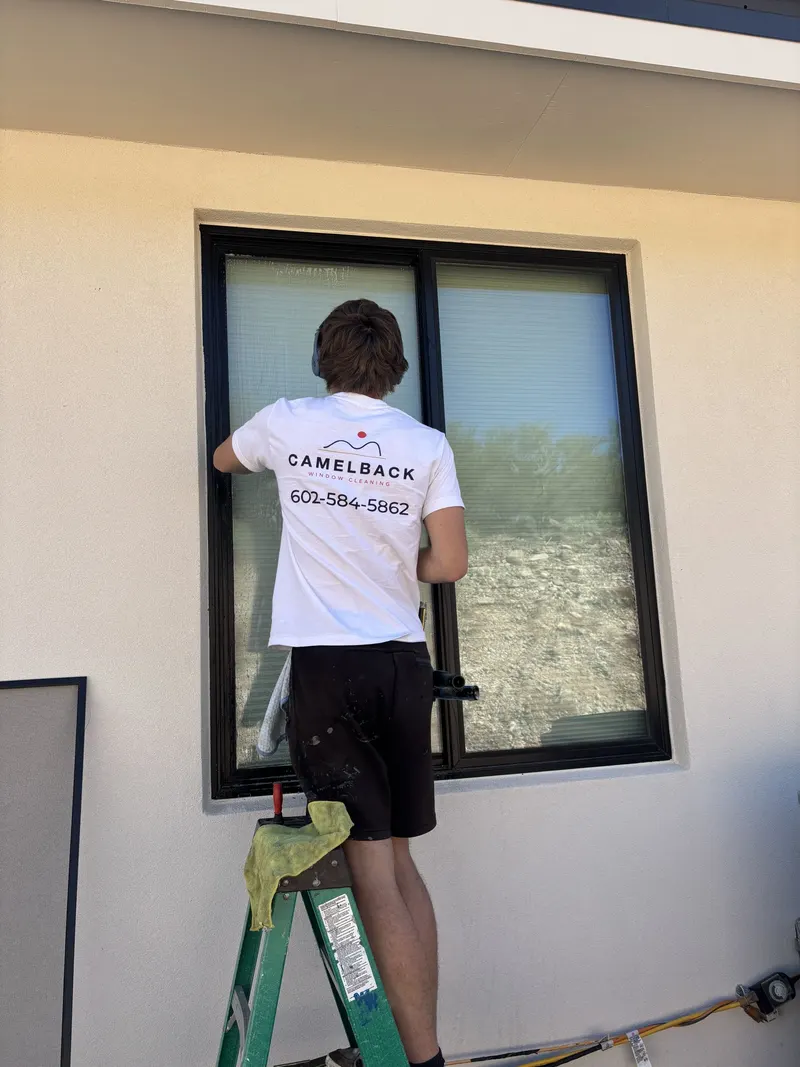
Short answer: soapy water, a scrubber and a squeegee. If you would rather hand the work off, Camelback Window Cleaning offers exterior window cleaning in Scottsdale, Phoenix and North Phoenix and Anthem. This post covers what works on outside glass and what to ask any provider.
What exterior dirt actually is
Outside glass is not just dusty. It carries layers. Fine desert dust sits on top. Pollen, bird droppings and bits of leaf stick to it. Sprinkler overspray leaves mineral spots, and monsoon rain deposits a muddy film that bakes on.
Each layer wants a slightly different approach, but they share one thing. The dirt has to leave the glass, not move around on it. Any method that spreads dirt thinly across the pane, which is what a spray and a paper towel often do, leaves the haze you were trying to remove.
The tool that removes the dirt matters more than the bottle.
The best outdoor window cleaner: soap and squeegee versus sprays
A bucket of water with a few drops of dish soap is hard to beat. The soap loosens the film, a scrubber lifts it, and the squeegee removes the water and the dirt together. Nothing stays behind, because everything went into the squeegee blade or the cloth.
A bottled spray is convenient for small jobs, but on large outside panes it works against you. The spray wets only part of the pane, a towel pushes the dirt around, and the cleaner dries in the sun before you finish. Heat makes it worse, which is why timing matters. Our guide on cleaning windows without streaks covers the full method.
Use too much soap and the squeegee leaves haze. A few drops is the right amount.
How do you use an aerosol glass cleaner outside?
An aerosol works best on small panes, door glass and the lower edge of a window you can reach from the ground. Foaming types stay where you spray them, which helps on vertical glass. Ammonia-free is the safer pick if any of your glass is tinted or coated.
- Brush or rinse off loose dust first so you are not rubbing grit across the pane.
- Spray only on glass that is cool to the touch, in shade or early morning.
- Wipe straight away with a clean microfiber cloth, working top to bottom.
- Use a fresh cloth for the second pass and for the frame edges.
- Stop if white spots stay after wiping. That is mineral film, and a spray will not lift it.
Vinegar and homemade mixes
Homemade cleaners get a lot of attention, and some deserve it. Plain white vinegar mixed with water can lift light mineral film, since vinegar is a mild acid and minerals are what it handles best. It also costs very little.
It has limits. Vinegar will not remove heavy deposits or etching, and it can damage coatings, so test a hidden corner first. It also does not replace a squeegee. A vinegar spray with a paper towel still smears.
Other homemade recipes are mostly soap, water and a splash of something to speed drying. They work about as well as plain soapy water, and for the same reason: the squeegee does the actual cleaning.
- Light dust: soapy water and a squeegee.
- Light mineral film: vinegar and water, then squeegee.
- Heavy mineral deposits: a dedicated glass treatment.
- Tinted or coated glass: check the manufacturer first.
Pure water explained
Some professionals clean outside glass with pure water, which is water that has had its dissolved minerals filtered out. The water is fed through a brush on a pole, and the brush scrubs the glass while the pure water rinses it.
The reason it leaves no spots is simple. Spots are minerals left behind by evaporating water. If the water has no minerals, nothing is left when it dries. That also means no soap is needed on the glass, plants or stucco.
Pure water is a method with real strengths for tall glass that a squeegee cannot reach. It does not remove existing hard water etching, and it is not the right tool for every pane or for interior glass. Whether a provider uses it is a question worth asking.
What to ask a provider
You can judge a window cleaning company by how they answer three questions. What method do you use on outside glass, and why? How do you handle mineral spots that a normal wash does not remove? What happens if I am not happy with the result?
A good answer is specific and honest about limits. If a company promises to fix etching or glosses over what a quote covers, keep looking. Our exterior window cleaning page explains how our visits run, and the North Phoenix and Anthem page covers the large homes and hillside glass we see most in that area. If you are in the hills, our pages on window cleaning in Paradise Valley and window cleaning in Cave Creek and Carefree explain how we plan tall and hillside glass.
A few practical tips tie this together. Use a squeegee sized to the pane, since a blade that is too short means more passes and more chances for lines. Keep a spare cloth for the frame edges. Replace the rubber when it nicks or hardens, because a bad blade undoes good technique.
Choose your timing before your product. Cool glass in shade gives any method a better result, and a hot pane makes even the best cleaner look bad.
Safety belongs in the conversation too. Never lean off a ladder to reach a far corner of a pane, and skip wet squeegee work on tile or pavers where footing is slick. If the glass is out of easy reach, that is the point to hand the job to a crew.
If you would rather not climb a ladder, tell us about the glass. Get instant quote and we text your quote back during business hours.
Key takeaways
- Soapy water and a squeegee beat most sprays on outside glass.
- Vinegar helps with light mineral film only.
- Use only a few drops of soap.
- Pure water leaves no spots because it has no minerals.
- Ask any provider how they handle mineral spots.