

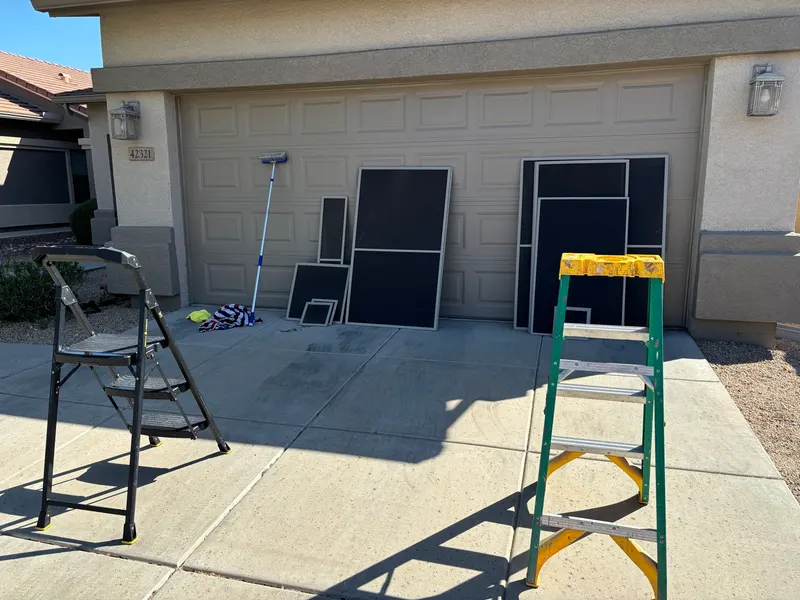
Why Valley screens load with dust
Window screens act like filters. Air passes through, but a share of the dust, pollen and plant debris stays in the mesh. In the Phoenix and Scottsdale area, long dry stretches give that material time to build. A windy afternoon can leave a fresh coat even when the glass was cleaned a week earlier.
Haboobs add a finer layer. The dust reaches corners, screen channels and the narrow gap between the screen and glass. Later, light rain or a sprinkler can dampen it. The mixture dries into a dull film that a dry brush may move around without removing.
Pollen and small bits of leaves add another texture. They catch on the mesh and hold more dust. A screen may look acceptable from across the room but still release a small cloud when you tap the frame. That buildup can also move back onto freshly cleaned glass when wind or water pushes through it.
That is why screen cleaning belongs with regular exterior glass care. If you wash the pane and leave a dusty screen in place, the job is only partly done. The window screen cleaning service covers screens and the tracks and sills around the glass that collect the same Valley grit.
The safest screen wash is gentle, supported and fully dry before reinstalling.
How to clean window screens: the four-step method
You do not need a long list of products. Gather a garden hose with a gentle spray setting, a bucket, mild dish soap, a soft-bristle brush or clean microfiber pad, and a few towels. Choose a flat work area in the shade. Hot mesh and frames dry too quickly, which can leave soap behind.
First, remove one screen at a time. Check how it sits before lifting it out, and note which side faces the room. If several screens are similar, label them with painter's tape so each one returns to the right opening. Hold the frame with both hands and avoid pulling from one corner.
Second, lay the screen on a clean, flat surface and rinse loose dust with a gentle stream. Work from the top toward the bottom. This first rinse matters because it carries away grit before the brush touches the mesh. Turn the screen over and rinse the other side.
Third, mix a small amount of mild soap with water. Scrub both sides with light, even passes. Support the frame and do not press hard enough to stretch the mesh. Spend extra time along the edges, where dust packs into the frame. A soft toothbrush can help with corners, but keep it away from loose spline or torn mesh.
Fourth, rinse until the water runs clear and no suds remain. Stand the screen upright against a stable wall in the shade, with a towel under it, and let it dry fully. Wipe the frame before reinstalling it. While the opening is clear, vacuum loose material from the track and wipe the sill.
- Remove and label each screen.
- Rinse loose dust from both sides.
- Scrub gently with mild soap and a soft brush.
- Rinse, dry fully and reinstall in the correct opening.
Mistakes that damage screens
A pressure washer is the biggest avoidable mistake. Its force can stretch mesh, pull it from the spline or bend a light aluminum frame. The damage may not show until you try to reinstall the screen and find that one edge no longer sits flat. A normal hose is enough for loose dust and soap.
Unsupported scrubbing causes similar trouble. A screen balanced on two chairs can flex in the middle. A frame held by one corner can twist. Keep the whole frame supported on a clean surface and use less pressure than you think you need. If dirt does not release, add another gentle soap pass instead of pushing harder.
Harsh cleaners and stiff brushes can fade the finish, fray fiberglass mesh or leave residue. Mild soap is usually enough. Test any unfamiliar product on a small edge and rinse it completely. Do not mix cleaners.
Putting a wet screen back is another common problem. Water trapped in the frame can drip into the track and mix with dust. Damp mesh also catches new grit faster. Give every screen time to dry, then clean the opening before it goes back.
Bent frames and torn mesh: repair or replace
Cleaning cannot correct a frame that no longer fits the opening. Sight down each edge while the screen is out. A small bow may explain why a corner pops loose or why the screen rattles. Forcing it into place can bend it further or damage the window channel.
Small mesh tears can sometimes be patched, but a patch remains visible and may not hold if the material is brittle. A long tear, several holes or mesh pulling away from the edge usually points to rescreening. The same is true when the spline has hardened and will not keep the mesh tight.
Replacement makes sense when the frame is badly twisted, a corner joint is broken or the profile no longer matches the window. Before ordering anything, measure carefully and check the frame style. Different windows use different channels, tabs and spring hardware.
If the screen is simply dirty and still sits square, wash it. If the mesh or frame has failed, repair or replacement is the honest next step. Cleaning harder will not solve a structural problem.
What a professional visit handles
A professional visit is useful when a home has many screens, second-story openings, fragile frames or tracks packed with grit. It also keeps the surrounding work on one schedule. The crew can remove and wash the screens, clean the glass, detail the selected tracks and sills, then reinstall each screen in its opening.
The order matters. Loose material comes off first. Screens are washed away from the clean glass. Tracks and sills are handled before the screen returns. The final check catches streaks, drips and frames that are not seated correctly.
For homes in Scottsdale, the Scottsdale window cleaning page explains the glass, screen and track options available in that service area. Photos of the windows and screens can help define the scope before the visit. Our guide to window tracks and stuck sliders covers the track side of the job.
For a small set of sound, ground-level screens, the garage method works well. For a full home, tall openings or damaged pieces, asking for help can save time and prevent bent frames. In both cases, gentle tools and complete drying do most of the work.
Key takeaways
- Use a hose, mild soap and a soft brush.
- Support the frame and avoid pressure washers.
- Let screens dry fully before reinstalling them.
- Repair or replace torn mesh and badly bent frames.
- Pair screen washing with exterior glass, tracks and sills.