

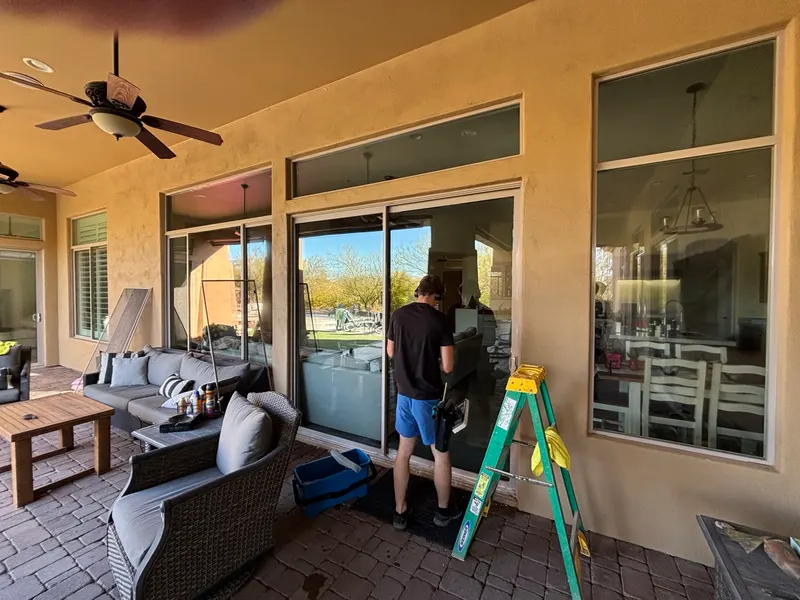
What collects in Valley tracks
A window track is a shallow metal channel that sits low on the frame, which makes it a perfect trap. Fine desert dust blows in and settles. Dead insects dry out and crumble. Pollen and bits of leaves pile up. Over time, all of it turns into a gritty paste.
Then there is water. Sprinkler spray and monsoon rain run into the track and dry there, leaving the same mineral deposits you see on glass. Mix those deposits with dust and you get something close to cement.
A slider rolls on small wheels. When the track is packed, the wheels ride on debris instead of metal. The door gets stiff, grinds when you push it, and eventually the wheels wear flat. Most of the time the cause is the track, not the door.
A slider that fights you is often fine. The track under it is the problem.
A step-by-step track clean
You need a vacuum with a crevice tool, a stiff but soft-bristled brush, an old toothbrush for corners, a bucket of warm water with a little mild cleaner, and a few dry cloths. Open the window or door fully so you can reach the whole channel.
First, vacuum the track from end to end. Get the dry loose material out before any water touches it, or you are making mud. Second, loosen what is stuck with the brush, working along the channel and into the corners. Third, wipe the track with a cloth dampened in the mild cleaner, changing to a fresh part of the cloth often.
Fourth, rinse by wiping with a clean damp cloth, and then dry the track completely. Leftover water pools in the low points and starts the cycle again. Last, apply a dry silicone lubricant to the track and the wheel path, and slide the door back and forth a few times to spread it.
- Vacuum first, then brush, then wipe.
- Work corners with a toothbrush.
- Dry the track fully before lubricating.
- Use a dry silicone spray, not oil.
Rollers, weep holes and what not to lubricate
Two details trip people up. The first is the weep holes, small slots in the bottom of many window tracks that let rain drain to the outside. If they clog, water sits in the track. Check them with a thin tool and clear any dirt.
The second is the lubricant. Oil and grease feel like the right answer, but they attract dust and turn into the same sticky paste you just cleaned out. A dry silicone lubricant leaves a slick surface without a wet film. Keep it off the glass and off anything you plan to paint.
Never spray lubricant into a dirty track. Clean first, always, because lubricant on top of grit just carries the grit further into the wheels.
Signs a roller is worn
Even a clean track cannot rescue a worn roller. Signs include a door that still drags after cleaning, a grinding noise on one side, a door that sits crooked in the frame, or wheels that look flat or cracked when you lift the panel.
Lifting a heavy sliding panel out of its frame is a two-person job, and the glass can be damaged if it slips. If cleaning and lubricating do not help, call a window or door repair specialist for the roller replacement rather than forcing the door. Cleaning and repair are separate jobs, and a good cleaner will tell you which one you need.
Tracks and sills as part of a Camelback visit
We treat tracks and sills as part of the cleaning, not as an extra. On a screens, tracks and sills visit, screens come off, tracks get cleared of grit, and sills are wiped, so the slider glides and the glass stays clean longer.
This is where Valley dust hides in Gilbert and the rest of the area. Our Gilbert window cleaning page covers the lakes and pool decks that leave mineral film in the tracks. For the screens themselves, read our guide to cleaning window screens.
A quick habit helps between visits. Once a month, run a vacuum crevice tool along each slider track, and wipe the bottom of the channel with a dry cloth. It takes a few minutes and keeps grit from building up into paste.
Pay extra attention after a dust storm or a stretch of heavy irrigation. Those are the moments when tracks fill fastest, and a quick pass then saves a long scrub later. If a door still sticks after a clean track, treat the wheels as the next suspect.
If your sliders have been sticking, send us a photo of the track and we will tell you what we see. Get instant quote and we plan the visit around it.
Key takeaways
- Packed tracks make rollers ride on debris.
- Vacuum before you wet anything.
- Dry silicone beats oil because it does not hold dust.
- Clear weep holes so rain can drain.
- Worn rollers need a repair specialist.