

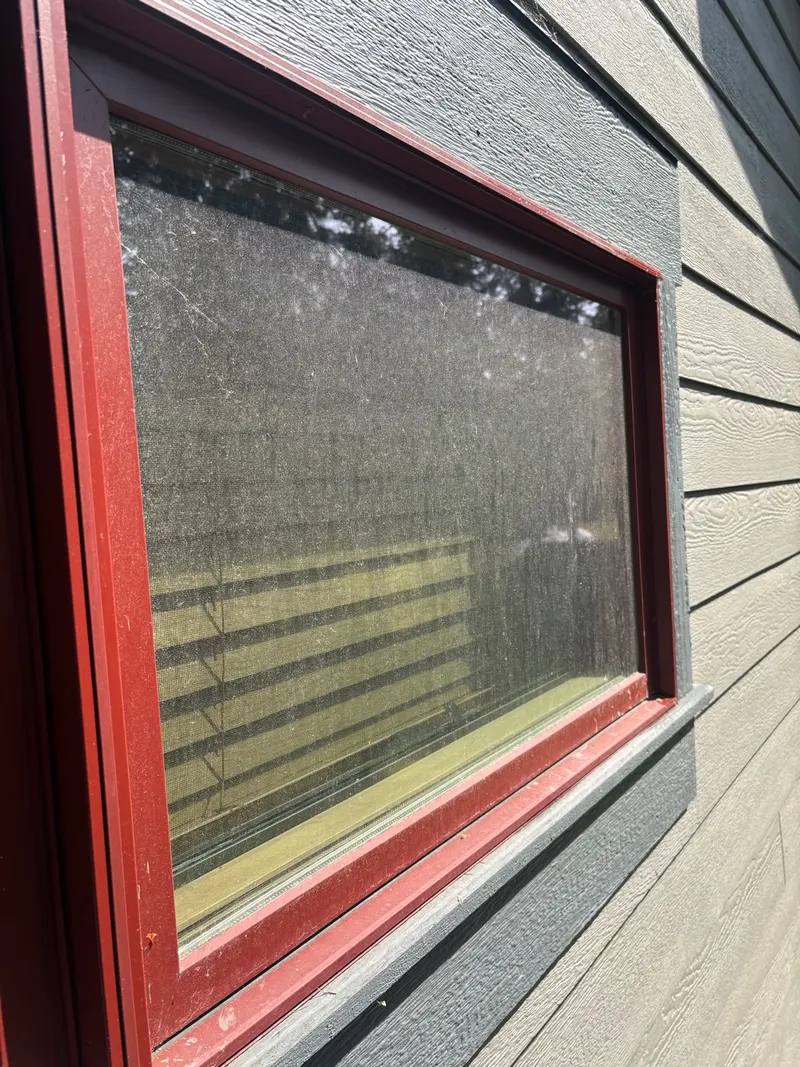
What pure-water window cleaning means
Tap water carries dissolved minerals. When ordinary water dries on hot Arizona glass, those minerals can stay behind as spots or a faint film. A pure-water system filters the incoming water before it is used for cleaning. The cleaner agitates dirt from the glass and frame, then rinses the surface with the filtered water.
Because the rinse contains fewer dissolved solids, there is less mineral material left to mark the glass as the water dries. The phrase spot-free describes that drying process. It does not mean the method can remove every kind of spot already on a window.
Equipment and filtration quality vary. If a company offers pure-water cleaning, ask how it checks the water after filtration, what brush will touch the glass and how the crew handles a pane that does not rinse clean. Those answers matter more than the equipment label.
Pure water helps prevent the rinse itself from leaving mineral spots. It does not make old hard-water deposits disappear on contact.
Why fewer spots can remain
A traditional exterior wash may finish with a squeegee and towel detail. A pure-water process often finishes with a thorough rinse. When filtration has removed the minerals and the glass has been scrubbed and rinsed correctly, the remaining water can dry without the familiar tap-water outline.
Preparation still matters. A dirty frame can release grit or residue after the glass has been rinsed. A missed corner can leave a drip. A screen placed against damp glass can add marks again. Good results come from the whole sequence, not from filtered water alone.
Arizona heat also makes timing important. Water can dry quickly on sunlit panes, so a cleaner should plan the order of work and keep the surface properly rinsed. Ask how the crew adjusts when one side of the home is in direct sun.
Where pure water fits well
The method is often useful for routine exterior maintenance, especially on upper panes that can be reached from the ground with an appropriate pole. It can clean broad runs of glass, frames and ledges without moving a ladder at every window. Ground-based work can also reduce activity against landscaping and exterior finishes.
It is a practical option when the main problem is loose desert dust, pollen, recent storm film or ordinary exterior grime. It can also make sense for regular maintenance, because the goal is to remove new soil before it turns into a harder deposit.
The method is not automatically right for every pane. Decorative details, unusual glass, damaged seals and access around awnings or screens may change the approach. Ask the cleaner to explain which windows will use purified water and which will be handled another way.
Where hand-detailing still wins
Sprinkler overspray is the common Arizona exception. Once mineral deposits have baked onto glass, a filtered rinse may remove surface dirt while leaving the bonded spots visible. That pane may need testing, a separate mineral treatment and careful hand work. Our guide to removing mineral deposits from glass explains why those deposits are different from loose dirt.
Paint specks, adhesive, construction debris and greasy fingerprints also need a closer look. Some require a tool or product chosen for that glass. More force is not the answer. A cleaner should identify the material first and tell you whether it falls within a standard wash or separate treatment.
Edges and corners may need a hand finish even when the main pane is rinsed with pure water. Interior glass is another place where a squeegee and towel detail can be the more controlled method. A mixed approach is normal when the house has different window types and different soil on each side.
The environmental angle, stated plainly
Pure-water cleaning can reduce the need for detergent during routine exterior work. That means fewer cleaning products may be carried to the property or rinsed from the glass. It can also let some upper windows be cleaned from the ground. Those are useful benefits, but eco-friendly should not be treated as a blanket promise.
A filtration system uses water and creates spent filter material. The amount of water used depends on the equipment, the crew and the condition of the property. A separate stain treatment may still require a cleaning product. Ask what is being used, why it is needed and how runoff is managed around plants and hardscape.
What to ask before booking
Ask whether the cleaner plans to use purified water on your specific windows, how filtration is checked and what happens if mineral spots remain. Ask whether screens, frames, ledges and final edge work are included. If the glass sits near sprinklers, send a close photo so the company can separate routine soil from possible hard-water treatment.
- Ask whether the cleaner plans to use purified water on your specific windows.
- Ask how filtration is checked.
- Ask what happens if mineral spots remain.
- Ask whether screens, frames, ledges and final edge work are included.
- Send a close photo if the glass sits near sprinklers.
Do not assume a company uses pure-water equipment unless it says so. Camelback's exterior window cleaning service clears desert dust from panes, frames and ledges, checks for sprinkler spots and finishes edges by hand. If mineral film may need separate treatment, the crew points it out before work begins.
For homes in the northeast Valley, visit the Scottsdale window cleaning page for local service details. Then get instant quote with wide photos of the windows and close photos of any spots that concern you.
Key takeaways
- Pure-water systems remove dissolved minerals from the cleaning water.
- A low-mineral rinse can dry with fewer water spots when the glass is properly cleaned.
- Baked-on sprinkler deposits may need separate hand treatment.
- Pure water can reduce detergent use, but water use and runoff still matter.
- Ask which panes will use purified water and how remaining spots will be handled.