

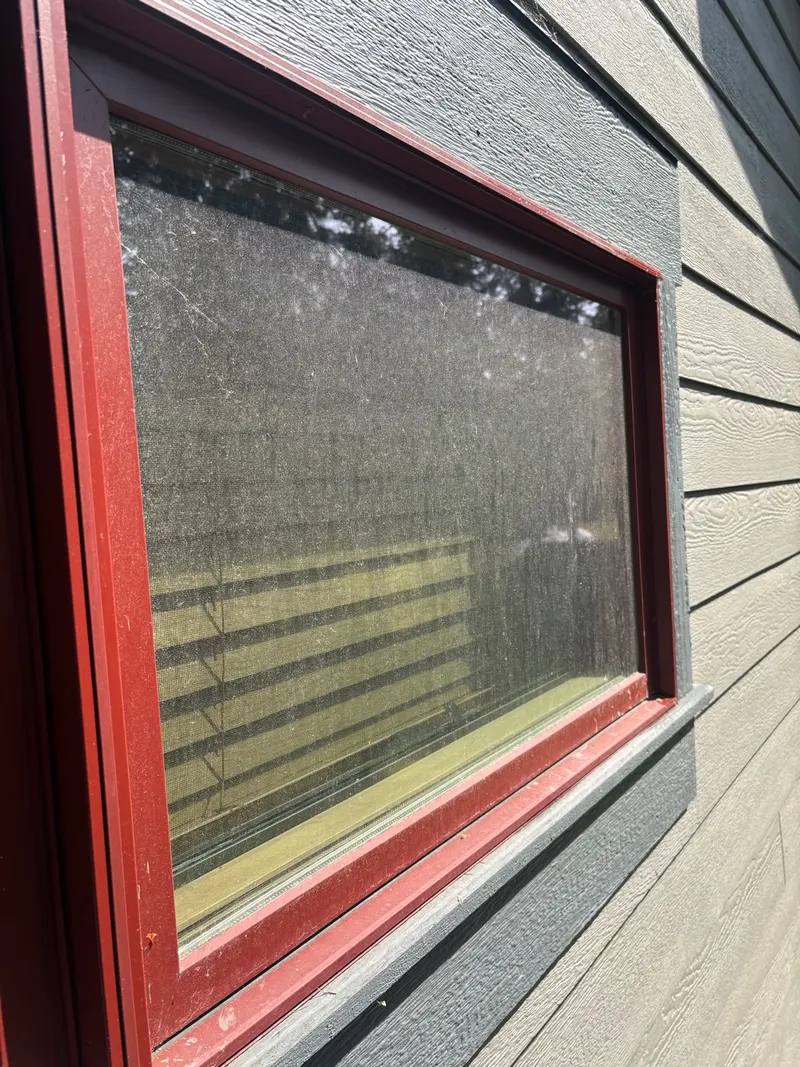
What the white haze is
Mineral deposits are what hard water leaves when it dries. Water in the Phoenix and Scottsdale area carries dissolved calcium and magnesium. When a drop sits on a window and evaporates, the water goes and the minerals stay as a white dot. Repeat that for months and the dots merge into a cloudy film.
This is why soap and water never fix it. Soap lifts dirt. It does not dissolve calcium. You can wash a mineral-stained pane perfectly and it will look just as cloudy once it dries.
The usual source is sprinkler overspray, because spray heads often point at the same pane every morning. Pool splash, a leaking drip line and a damp planter wall do the same thing on glass nearby. You will see the arc of spots on lower panes and pool-side glass first.
Treat the glass, then fix the water, or the haze comes back.
Film or etching: the test
Before you treat anything, work out what stage you are in. There are two.
- Surface film: deposits sit on top of the glass. They look chalky and may feel slightly rough. They respond to treatment.
- Etching: after long exposure the minerals have changed the glass surface itself. A permanent dull or rainbow-tinted haze remains after treatment.
Wet a small area. If the pane looks clear while wet and cloudy once it dries, that is film. If it looks dull even when wet, and treatment does not change it, you are probably looking at etching. Test in a corner first so you know where you stand.
This matters because it sets your expectations. Film can often be removed. Etching can sometimes be improved, but the glass will not look new.
Safe DIY for light film
For a few panes with light buildup, a careful home treatment is reasonable. Work in shade on cool glass, because anything that dries quickly leaves new marks.
Start by washing off dust and grit. Rubbing a dry gritty pane with a pad is how glass gets scratched. Then use a mild acid cleaner made for glass, or white vinegar for the lightest film, and a soft non-scratch pad. Work in small sections, keep the surface wet, and rinse well. Keep acid off frames, stone, painted trim and metal finishes, and wear gloves.
Scrapers and steel wool can scratch glass, so skip them. If your glass has a coating or tint, test a hidden spot first or check with the manufacturer, since some coatings do not tolerate acid.
If a second careful pass changes nothing, stop. More rubbing will not help and can damage the surface. At that point the deposits are either heavy or the glass is etched.
Pro restoration: what it can and cannot do
Heavy deposits need a dedicated treatment and the right tools, applied evenly and kept wet. That is what our hard water stain removal service does. We assess each pane first and tell you what we think will come off.
What it cannot do is reverse etching. Etched glass has been physically changed. Treatment can reduce the haze and improve clarity, but it cannot return the surface to new. We say that before starting, not after, because you should decide with the real picture.
For large estate windows in Paradise Valley and elsewhere, the cost of replacement glass is a real consideration, and a good assessment helps you decide whether treatment is worth it. The Paradise Valley window cleaning page covers the homes we see most often with this problem.
Prevention: stop the water
Treatment without prevention is a recurring chore. The simplest fix is to stop the water from hitting the glass. Adjust sprinkler heads so they spray away from windows. Replace worn nozzles that mist wider than they should. Check drip lines for leaks near the house.
Regular cleaning also helps, because fresh deposits are much easier to remove than old ones. A pane cleaned every few months rarely reaches the etching stage. Our companion guide on removing hard water stains from windows goes deeper on the cleaning method.
One more detail helps you judge results. Check the glass from an angle in strong light, not straight on. Film and etching both show up best when light skims the surface, so look again after cleaning before you decide it is done.
Keep notes on which panes are affected. If the same two or three windows keep clouding, the water source is probably aimed at them, and a small sprinkler adjustment may be the simplest fix you can make.
If your glass is already cloudy, send a close photo. Get instant quote and we will tell you whether it looks like film or etching.
Key takeaways
- The white haze is calcium and magnesium, not dirt.
- Wet the glass to tell film from etching.
- Use gentle tools and test hidden spots first.
- Etched glass can be improved, not restored.
- Fix the sprinklers or the deposits return.