

Why rain dirties glass
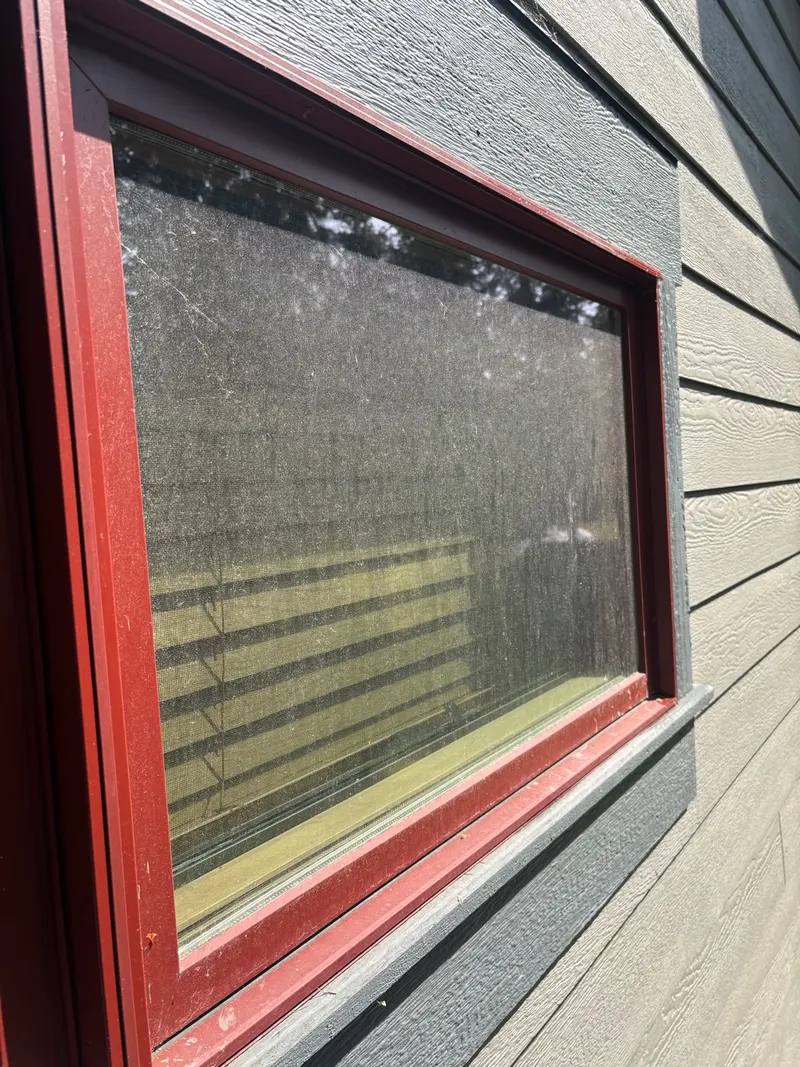
Water that falls on a roof runs off it. Water that lands on a vertical pane has nowhere to go, so it beads, slides an inch or two, catches on the dust it is already carrying and stops. Then the desert air takes the water back. Whatever the drop picked up on the way down stays exactly where the drop quit.
A pane that was holding a thin, even layer of dust gets that layer gathered into hundreds of small deposits with hard edges, and edges are what the eye catches. The glass is carrying about the same amount of dirt as it was the day before. It is no longer spread out, so you can see all of it at once.
Rain does not wash a window. It collects the dust into marks you can see.
What is in Valley rain?
A raindrop forms high up and falls a long way through whatever is in the air underneath it. Over the Valley that means dust off open ground, graded lots, dry washes and road shoulders. The drop collects some of that on the descent and arrives carrying it.
The water itself is soft. Rain has not run through rock and soil the way tap water has, so it holds very little dissolved calcium or magnesium, and a mark left by rain is usually a pile of solids sitting on the surface. Most of it washes off with a proper clean. The pale rings that survive a wash came from a different source, usually sprinkler spray or a hose.
Runoff from above
The second source is everything above the window. Roof tile, parapet caps, fascia, stucco and the ledge over a window all collect dust between storms, and the first water across them carries it down the wall. On the glass that shows up as vertical streaks running from the top edge, or as a line of heavy drip marks where an overhang ends.
Scuppers and canales concentrate the effect by sending a roof's worth of runoff through one opening, so whatever sits below that opening gets the dirty end of the storm. On a hillside lot the same thing happens at ground level, where water coming down the slope throws grit onto the lowest panes.
Why the first rain is worst
After a long dry stretch, every horizontal surface on a house is loaded. The first rain to arrive takes all of it somewhere, and some of it lands on your windows. A second storm later the same week runs over surfaces that have already been rinsed, so the glass comes out of that one looking much better.
Length matters too. Windows can look dreadful after a short, light shower and fine after a long, steady soaking. A storm that keeps running carries the dirt off the pane and down the wall. A sprinkle only wets the dust and leaves it there to dry.
Dust before the rain
The outflow ahead of a storm reaches dry ground before the rain does and lifts a wall of dust, so the glass gets a fresh coat minutes before it gets wet. That leaves spatter instead of spotting, flecks of mud across the pane, worst on the storm side of the house and on the low windows near gravel, planters and the edge of a drive.
Homes that already live next to a steady dust supply see the same thing at a larger scale, and what a dirt lot nearby does to Phoenix windows covers that side of it.
Which marks wash off?
Both kinds sit on a pane at once after a storm, and they need different work, so it pays to know which you are looking at before anyone starts scrubbing.
Wash one pane with soap and water, pull it dry and look at it in afternoon light. Dust and mud marks come away and the glass goes clear. Pale rings and cloudy bands that are still there once the water has gone are minerals, left behind when sprinkler spray or tap water dried on the pane, and more washing will not move them.
Our guide to removing hard water stains from windows walks through that test at home. Once a deposit is bonded to the glass it becomes a job for hard water stain removal rather than another wash.
What rain does to tracks
Runoff does not stop at the glass. It carries grit into the bottom track of every slider and low window it crosses, and wet grit packs down into a paste that dries hard in the channel. The rollers then ride on that, which is how a door that worked in September starts dragging in November.
Frames have small weep holes along the bottom edge to let water out. Storm debris blocks them, water sits in the channel instead of draining, and the sill stays damp long after the sky clears. Clearing the track is the part of a post-storm clean that gets skipped.
Screens take their own share. Loaded mesh turns blotchy in rain and hands that load back to the pane with the next breeze, so screens, tracks and sills usually want the same visit as the glass. The sticking slider on its own is covered in why window tracks and sliders stick.
What to check after a rain
- The top edge of each pane, where a streak off the wall or an overhang starts.
- The drip line under eaves, scuppers and canales, which marks whatever sits above it.
- Low windows next to gravel, planters and the edge of a drive, where splash throws grit up.
- The storm side of the house, usually the side the wind came from, for mud flecks.
- The bottom track of sliders and low windows for packed grit and standing water.
- The weep holes along the frame, which should be clear enough to drain.
- The screens, for a muddy, uneven look that will transfer back to clean glass.
When to clean after rain
Wait for the whole pattern to pass instead of chasing each storm. Valley rain tends to arrive in cycles over several days, and glass cleaned between two systems gets undone by the second one. Once the forecast turns dry again, a clean holds for as long as the dust lets it.
Leave the hose alone in the meantime. Rinsing spotted windows on a warm afternoon puts hard tap water on glass warm enough to dry it on contact, which trades a layer of dust for a set of mineral rings that are much harder to shift. If you do wash the glass yourself, work in shade and pull the water off the pane rather than letting it dry there. How to clean windows without streaks has the method.
Booking a visit
Camelback Window Cleaning works Monday through Saturday, 7:00 am to 5:00 pm, and the crew texts before arriving. Exterior window cleaning covers every outside pane, frame and ledge. Screens come off, get washed and go back in, and the tracks are cleared so the sliders glide again.
Hillside lots, long driveways and walls of view glass change how a visit gets planned, and the Paradise Valley window cleaning page goes through what that looks like out there. Once the weather has settled, get instant quote with a photo of the spotted glass and one of whatever sits above it, and you get a written scope back.
Key takeaways
- Rain does not clean a window, it gathers the dust already on it into spots and streaks.
- Most of what a storm leaves behind is loose solids, and a proper wash takes them off.
- Pale rings that survive a wash are minerals from sprinklers or tap water, not from rain.
- Streaks from the top edge come off the roof, the fascia and whatever else sits above the glass.
- Runoff packs grit into tracks and blocks weep holes, so the frame needs the same attention as the pane.