

What lands on shop glass
A restaurant front in Phoenix collects a different mix than a house does, and it collects it faster. The street sends road dust and exhaust film at the lower panes all day. Planters and sidewalk irrigation throw hard water across the same band. Customers arrive and put their hands on the door. If food is cooked on site, warm air carrying a little oil drifts out of the kitchen and settles on whatever glass sits in its path.
Those four things leave four different residues, and that is the part that matters, because they do not come off the same way. Dust lifts with water and a clean pass. Oil film has to be broken down first or a squeegee just spreads it thinner. Minerals left behind by dried tap water will not move with washing at all, so they get treated as their own piece of work.
The useful way to look at a storefront is pane by pane rather than wall by wall. The display window beside the door, the door itself, the transom above it and the patio panels around the corner all live different lives. A plan that treats the front as one surface keeps missing the panes that work hardest.
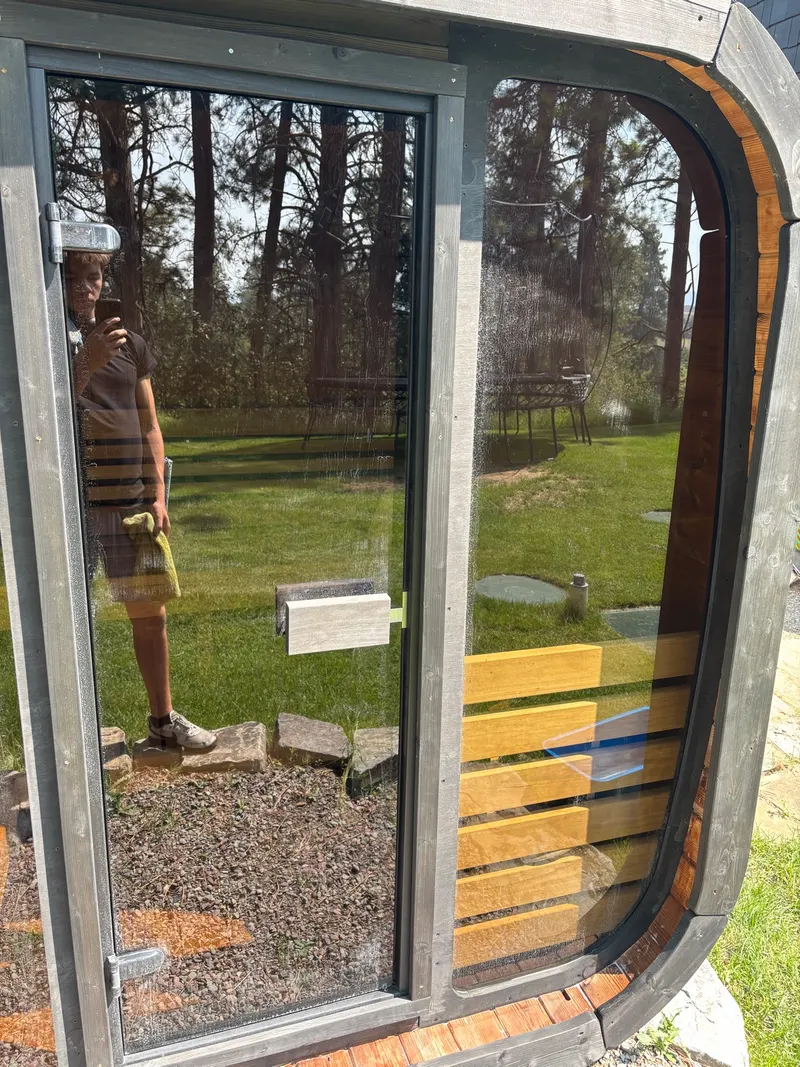
The entry door is the only pane on a storefront that every customer touches, and by the afternoon it shows.
Why the door is different
The entry door is the only glass on the building that people touch. Every customer pushes it, and a fair number push it with a drink in the other hand. Children arrive at the height of the lower pane. Dogs waiting outside leave nose prints on it. By the middle of a busy afternoon the door reads as the dirtiest thing on the front even when the display glass next to it is still clear.
Door glass also has hardware around it that holds grime. Push plates, pulls, closers and the frame rail collect the same oils that land on the pane, and glass cleaned against a dirty frame smears again the first time the door swings. Storefront and commercial window cleaning covers the door glass, the handles and the frames together for that reason, inside face as well as out.
What gets missed out front
- The inside face of the entry door, where hands land as people leave.
- The frame rail and push plate, which smear a freshly cleaned pane.
- Transoms above the door, high enough that nobody looks up at them.
- The bottom few inches of display glass, behind planters and signage.
- Sills and the threshold track, where sidewalk grit piles up.
- The side of the building facing the parking lot or the alley.
- Patio enclosure panels, which are glass too but get treated as furniture.
Patio panels and misters
Phoenix restaurants live outdoors for a good part of the year, and the patio is where the glass gets complicated. Folding door systems, wind panels, glass railings and enclosure walls all sit low, close to foot traffic, and in the path of whatever the patio runs.
Misting systems are the part owners tend to miss. A mister puts a fine spray of tap water into the air, and Valley tap water is hard. Much of that spray evaporates before it reaches anyone, and the minerals it was carrying land on the nearest surface and stay there. Glass under or beside a mister line picks up a chalky haze that gets a little heavier every warm evening the system runs.
Washing does not take that haze off. The deposit is mineral, it has set into the face of the glass, and soap and water slide right over it. It needs hard water stain removal as a separate step, and the sooner it is looked at the better, because film left to build can etch the glass underneath it. Our guide to removing mineral deposits from glass walks through the test that tells film and etching apart.
Point the mister heads away from glass where the layout allows it. That one adjustment does more for patio panels than any amount of extra washing, because it stops the next deposit from forming instead of clearing the last one.
What a visit covers
On a storefront, Camelback Window Cleaning cleans the street-facing windows, display glass and transoms inside and out, then the entry door glass, handles and frames. Dust and debris come out of the sills and off the base of the glass. The crew works around customers, keeps drop cloths down at the entrance so the floor stays dry, and leaves nothing on the sidewalk.
Folding patio doors and sliders belong in the same conversation. They run in a track, grit in that track is what makes a door drag, and the track is right at the height where sidewalk dust lands. Screens, tracks and sills is the part of the work that clears them so the doors glide again. Say up front which doors you open every day and which ones stay shut through the summer.
A walkthrough closes the visit. Someone from the restaurant looks at the glass with the crew before they leave, which is the moment to point at a pane that still has film on it or to decide that the patio needs a mineral treatment rather than another wash.
Working around service
Timing is the practical problem for a restaurant, and it has two sides. One is your customers. Nobody wants a ladder at the entrance during a lunch rush, so the work goes in the quiet stretch, which for most kitchens is early morning before the doors open or the flat part of the afternoon between services.
The other side is the sun. Glass worked in full sun dries before it can be pulled off cleanly, which is how a front ends up streaked an hour after it was washed. A west-facing patio is best done in the morning, and a street front that takes the morning sun does better later in the day. Camelback works Monday through Saturday, 7:00 am to 5:00 pm, and the crew texts before arriving, so the arrival lands where you put it rather than in the middle of a seating.
How often to come back is a separate question, and it depends on foot traffic more than on the calendar. Our post on how often a storefront should get its windows cleaned goes through that by business type.
Before you book
Most of what makes a storefront quote accurate is detail the owner already knows and does not think to mention. A front with a patio enclosure, a mister line and a transom over the door is a different visit from a single pane of display glass, even if both face the same street.
Worth saying in the quote
- Your opening hours and the quietest stretch of the day.
- Which panes face the street, and which face a lot or an alley.
- Whether food is cooked on site, and where the kitchen vents.
- Any patio enclosure, folding doors or glass railings.
- Mister lines, planters or irrigation heads near the glass.
- Transoms or high display glass that will need a ladder.
- Who will be on site to walk the glass before the crew leaves.
Central Phoenix detail, from the neighborhoods to the kind of glass that is common in them, sits on the Phoenix window cleaning page. Once you know roughly which panes you want covered, get instant quote with a few photos of the front, including the door and the patio, and a written scope comes back.
Key takeaways
- Street dust, hand oils, cooking film and hard water each leave a different residue.
- The entry door and its frame get dirty faster than the display glass beside it.
- Mister spray dries on patio panels and leaves a mineral haze that washing will not move.
- Transoms, thresholds and the parking lot side are the panes skipped most often.
- Mention your hours, your kitchen vents and your patio setup when you ask for a quote.