

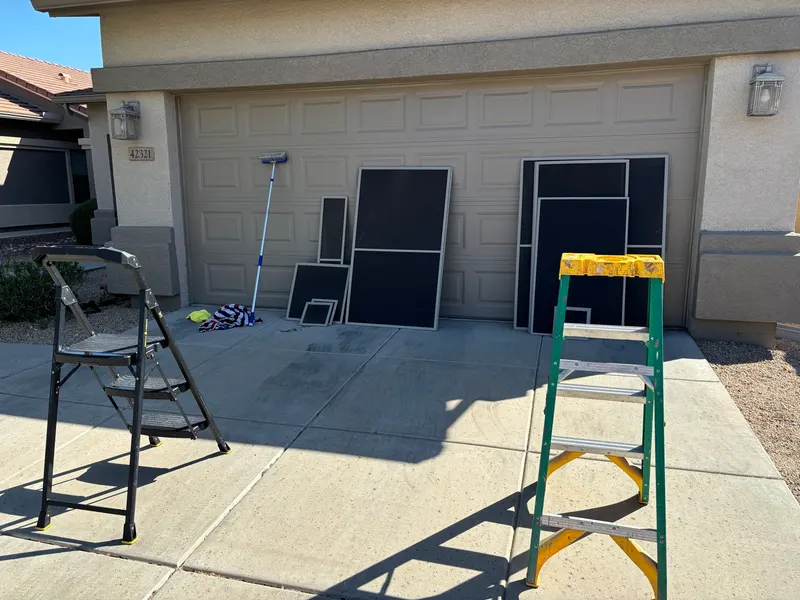
What a solar screen does
A solar screen is a shade product that sits outside the glass. The mesh is woven tighter and darker than insect screen, and it covers the opening so that sunlight lands on the fabric before it reaches the pane. Stand in a room with them up and the light reads softer and grayer than it does through a bare window.
Around the Valley they show up most on the west and south faces of a house, where the afternoon sun does the most work. A home might have them on four windows or on every opening it has. Either way they change what a window cleaning visit involves, because there is now a second surface in front of every pane.
A solar screen hides the state of the glass behind it until the day it comes off.
Why it has to come off
No squeegee reaches the outer face of a pane through mesh. A rubber blade has to sit flat on the glass and get pulled across it, and the screen is in the way of both. Washing a window with the solar screen still mounted gets you the inside face and whatever anyone can reach around the edges.
Solar screens are harder to work around than ordinary insect screens. An insect screen usually sits in its own channel in the window frame and lifts straight out. A solar screen is often sized to cover the whole opening, frame included, and is held on the outside with clips, turn buttons or screws. Taking one down is a small job of its own, which is why screens, tracks and sills is quoted as its own piece of work rather than folded in with the glass.
What the mesh holds
A tight weave catches more than a loose one. Fine desert dust settles into solar screen fabric and stays in it, and because the mesh is dark to start with, a loaded screen looks much the same as a clean one from a few steps away. The test is to take one down and hold it up against the sky. Open weave reads as light coming through. A screen that reads flat and solid is carrying a load.
Pollen does the same thing in spring. Lint, cobwebs and insect debris collect along the bottom rail where the frame catches them. A screen in range of a sprinkler head picks up a third thing. Spray that dries on the fabric leaves minerals behind, which show up on dark mesh as a pale haze and on the pane behind it as spotting. Washing lifts the film off the mesh. The deposit on the glass is separate work, and our post on removing mineral deposits from glass covers what will and will not come off.
The sun works on the fabric itself. Years of it leave the weave brittle, so an older solar screen frays at the corners, loosens its spline and tears under a brush that would have been fine when it was new. That turns up the day the screen comes down, not while it is hanging.
Getting them down safely
The order of a visit is the same as any screen job. Screens first, then tracks and sills while the openings are empty, then the glass, then the screens go back. The handling is what changes.
- Look at how each one is held before pulling on it. Clips and turn buttons release by hand. Screws need a driver, and a screwed-on screen above the ground floor is a two-person lift.
- Mark each screen or set them down in order. They are cut to their own openings and will not swap.
- Lay them flat on a soft surface instead of stacking them on concrete. Grit under one frame scuffs the mesh of the screen below it.
- Wash with mild soap, a soft brush and a hose. Leave the pressure washer alone, because it stretches the weave and drives the spline out of the frame.
- Let them drain and dry all the way through. Dark fabric holds water in the weave longer than light insect mesh does.
- Refit each one into the opening it came from, then check that every clip is holding the frame flat against the house.
Upper-floor screens are the ones to leave. The trouble is the ladder footing rather than the washing, and a full-opening solar screen is wide and awkward to carry down one-handed. Note which ones you want done and have them handled with the glass. Our guide on how to clean window screens walks through the washing itself.
Sun on a bare pane
Taking a solar screen off does one thing people do not plan for. The glass behind it has been in shade for months, and the moment the screen is down that pane is in full sun. A window in direct sun dries faster than anyone can pull a squeegee across it, and solution that dries on the glass leaves the streaking the wash was meant to clear.
The answer is the order you work the house. Take the shaded elevation first and come back to the sunny one, or start early and stay ahead of the light. Our post on cleaning windows without streaks goes through the rest of it. A screen laid out to dry has the same problem, since hot concrete dries the rinse water onto the mesh before it can run off.
Down for the cool months
Solar screens are a trade. They keep sun off the glass, and they also take away part of the view and part of the daylight in the room. Some households pull them down once the weather turns and put them back before summer, so the low winter sun gets into the house. Others leave them up all year and live with darker rooms.
If yours are coming down for the cool months, that is the day to have the glass cleaned. The pane behind a solar screen has sat in shade since spring and has been out of reach the whole time, so it is usually the dirtiest glass in the house the moment the screen is off. Wash the screens before they go into storage rather than after, and store them flat, labeled and out of the sun.
Inside glass is worth a look on the same day. A room behind solar screens gets a muted, even light that hides film on the inner face of the pane, and that film shows the moment the shade comes off. Interior window cleaning is done with shoe covers and drop cloths.
What to ask a cleaner
Solar screens are the line item most often left vague in a quote, because taking them down is real work and not every scope includes it. Ask directly:
- Do the solar screens come down and get washed, or are they brushed while they stay up?
- Who takes them down and puts them back, and does the written scope name that work?
- What happens if a screen turns out to be brittle or torn, or a clip breaks on the way off?
- Are the tracks and sills cleared while the openings are empty?
- Is the inside glass part of the same visit or a separate one?
It helps to say what you have before anyone comes out. How many solar screens are on the house, which ones sit above the ground floor, whether any are screwed on rather than clipped, and whether a sprinkler zone throws onto a window. A couple of photos from the ground are enough to work from.
Camelback Window Cleaning removes screens, washes them and puts them back in the openings they came from, and clears the tracks so sliders glide. Exterior window cleaning covers every pane, frame and ledge. Local detail for the East Valley sits on the Mesa window cleaning page. Local detail for the north Valley sits on the pages for Scottsdale window cleaners, window cleaning in Paradise Valley and window cleaning in Cave Creek and Carefree.
The crew texts before arriving, and hours are Monday through Saturday, 7:00 am to 5:00 pm. Once you know which openings you want covered, get instant quote with a photo or two of the screens and the glass.
Key takeaways
- The glass behind a solar screen cannot be squeegeed while the screen is up.
- Tight dark mesh holds more dust than insect screen and hides it well.
- Clips, turn buttons and screws make a solar screen slower to take down than an ordinary one.
- A pane coming out of shade into full sun dries faster than a squeegee can work.
- The day the screens come down for the cool months is the day to clean the glass.