

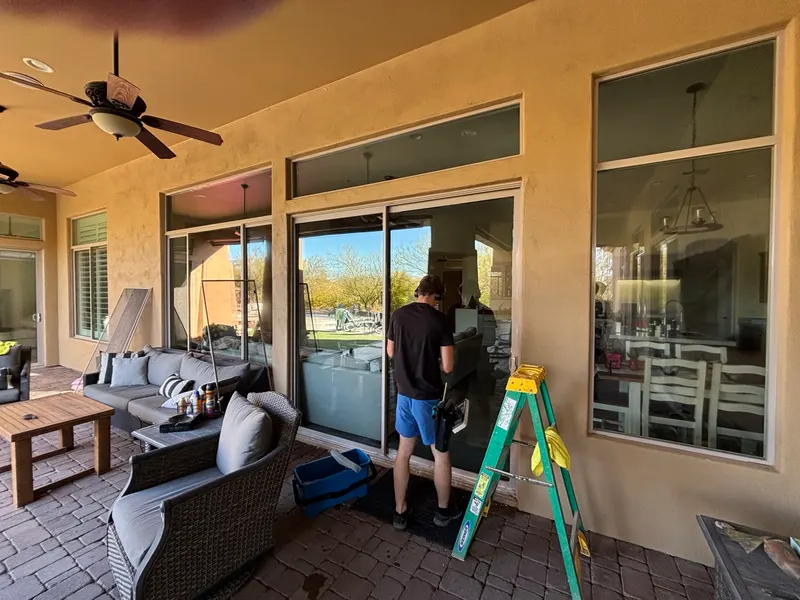
What makes a window old
Age shows up in the parts around the glass before it shows up in the pane. A window from an earlier era usually has a single sheet of glass in an aluminum or wood frame, a sash that somebody painted over at least once, and either real divided panes or a grille clipped over one large sheet. Around the historic square in Downtown Chandler the houses and small shop buildings run to smaller windows in older frames. The mid-century ranches in Arcadia have rows of aluminum sliders that have been in the wall since the house was built.
None of that is a problem on its own. It changes what gets touched, in what order, and what you should expect to be told when the visit is over.
On an older window the frame decides how the glass looks a week later.
Why the frame goes first
Aluminum loses its finish in Valley sun and turns a chalky grey. Painted wood does something close to the same thing, and old glazing putty dries out and gives up a fine grit along the edge of the pane. All three of those sit above the glass.
That is why an older window can streak again a day after someone cleaned it. The glass was clean. Then the first dew, the first sprinkler cycle or the first rain carried chalk off the frame and down the pane, in lines that follow the frame. Washing the frame and the sill first and finishing the glass afterward is the only order that holds up. That is part of why exterior window cleaning covers the pane, the frame and the ledge as one piece of work.
Chalk that has been building for years does not all come off in one visit. A frame can be washed down and still shed a little afterward, and a cleaner should say that before starting rather than after.
Small panes take hand work
A squeegee needs a clear run across the glass and room to turn at the end of it. On a true divided window each pane is framed on four sides and too small for that, so every one of them gets finished by hand and dried at the edges on its own. The count adds up fast. One divided window can hold more separate panes than a whole wall of sliding glass.
Muntins also hold water. Water that sits in the corner of a wooden muntin works its way back out when the sun hits that wall, so each corner gets dried instead of left. A grille that clips over one large sheet is quicker, and it holds dust in every corner, which has to come off before anyone touches the pane.
What a clean cannot fix
Some of what you see on old glass is in the glass. Naming it early is worth more than discovering it at the end of a visit.
- Mineral film that has dried and redried for years. Film can often be improved. Glass that the minerals have etched can only be improved, and our post on how to tell mineral film from etching shows the difference.
- Fog or droplets trapped between two layers of glass. The moisture is sealed inside the unit, so neither face reaches it, and replacing the unit is glass work rather than cleaning.
- Scratches from an earlier dry wipe or an earlier blade. Cleaning the pane around them makes them easier to see.
- Paint from a job that was done years ago and has cured since. Fresh paint lifts. Old paint often reaches the point where getting the last of it off would risk the glass more than leaving it does.
- Original glass with waves and bubbles in it. That is how it was made, and it stays.
Old screens come off carefully
Screens are removed, washed and put back in on a normal visit, and an old one needs a look before any of that. Sun makes the spline brittle and the mesh stiff, and an aluminum screen frame that has been in the same opening for decades can go soft at the corners. A frame like that can come out and go back in. It can also come apart in somebody's hands. The call is to look, say what it is, and let you decide.
Camelback does not repair screens or fit new mesh. That is a different trade. Screens, tracks and sills means washing and reinstalling, with the tracks cleared so the sliders move again, and our post on why tracks and sliders stick in Arizona homes covers what collects in an old track.
Sashes that will not open
Plenty of older windows in the Valley have been painted shut at some point. Both faces of the glass can still be cleaned with the sash closed, because a window does not have to open for anyone to reach it. What should not happen is somebody levering a painted sash for a better angle. Putty holds the pane in an older frame, and a sash that gets forced can crack the putty line.
An interior visit runs the same way in an old house as a new one, with shoe covers and drop cloths at the door. What changes with interior window cleaning on an older home is the pace, because small panes, deep sills and painted sashes all take longer than one flat sheet of glass in a modern frame.
What to check before you book
Ten minutes with a phone camera gets you most of what a cleaner needs to plan the day.
- Run a finger down an outside frame. Grey or white powder on your finger means oxidation or chalking paint, and the frame needs a pass of its own.
- Look for fog or droplets between two layers of glass and note which windows. Those are for a glass company.
- Look at each pane from an angle in early or late light. Film shows up then and hides at midday.
- Press a screen frame gently at one corner. If it flexes or the mesh crackles, say so before anyone pulls it out of the wall.
- Open every sash and slider once and note the ones that are painted shut or grinding.
- Check the putty line around any single pane for cracks or missing sections.
- Count the divided windows. The pane count sets the pace of the whole visit more than the square footage does.
Booking a visit
Say what the windows are before a date gets set. Roughly how old the house is, whether the frames are aluminum or wood, how many divided windows there are and which sashes do not open. Photographs of the two or three worst windows carry more than a description does.
Camelback Window Cleaning works Monday to Saturday, 7:00 am to 5:00 pm, and the crew texts before arriving. Older houses and shop buildings near the square are part of the work on the Chandler window cleaning page. Send the photographs with the instant quote form and say roughly how many windows the house has.
Key takeaways
- Oxidized aluminum and chalking paint sit above the glass, so the frame and sill are washed before the pane is finished.
- Streaks that come back a day later usually came off the frame rather than out of the glass.
- Divided windows are finished pane by pane by hand, and the pane count sets the pace of the visit.
- Fog sealed between two layers of glass is not dirt and cannot be reached from either face.
- Brittle mesh and soft screen frames get looked at and reported before anyone pulls them out of the opening.