

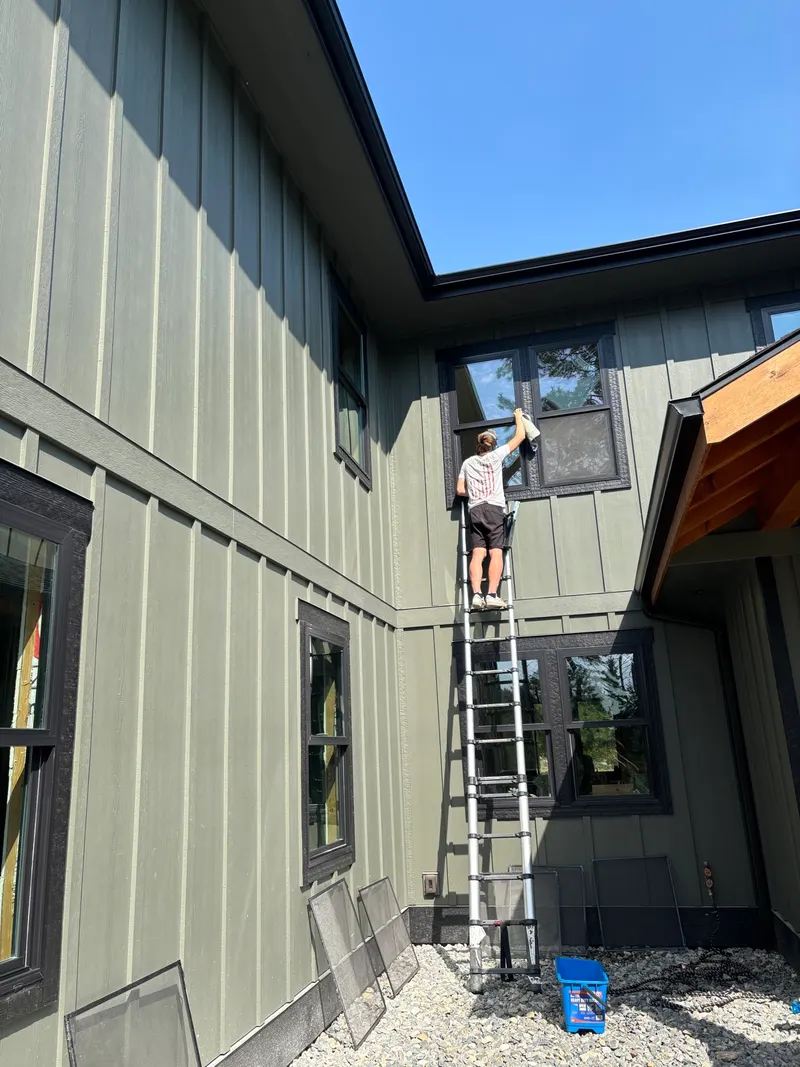
Before the crew arrives
Most of a Paradise Valley visit is decided before anyone picks up a squeegee. You send the address and describe the glass, and the quote comes back with a written scope, so the panes being cleaned are listed before the day arrives. If you are not sure how to describe a wall of glass or a stairwell window, photos from the ground are enough to work from.
Access is the other half of the plan. Properties here sit behind gates, at the end of long driveways, and on sloped lots where the ground under a second-story window is not level. Sort that out in advance and the crew brings the right equipment the first time instead of improvising on the day.
- Gate codes, call box numbers or the name of whoever opens the gate.
- Where the crew should park, and whether a service vehicle fits the driveway.
- Side gates that stay locked, and any pool gate that must be latched again.
- Dogs, and which yard they will be in during the visit.
- Your irrigation schedule, so nobody cleans a pane while the sprinklers run on it.
- Rooms, patios or staged areas that should stay undisturbed.
- Any cracked pane, failed seal or loose screen frame you already know about.
The crew texts before the visit so you know when to expect them. Camelback works Monday through Saturday, 7:00 am to 5:00 pm, and tall or shaded glass is often scheduled for the part of the day that suits it.
Access is the part of a Paradise Valley visit that gets planned first.
What the exterior work covers
Exterior work takes in every pane, frame and ledge, not only the middle of the glass. That distinction matters more here than it does in a wetter climate. Desert dust settles on the top edge of a frame and on the ledge below the pane, and the first rain after a dusty stretch washes it down across clean glass in streaks.
Sprinklers are the other reliable source of marks. Overspray lands on the lower third of ground-floor windows, dries in the sun and leaves a pale ring that soap and water do not lift. Hillside lots collect a different problem, because glass facing open desert catches whatever the wind carries off the slope.
Height changes the method rather than the standard. Two-story walls, stairwell glass and panes above a sloped yard need the access planned in advance, which is why the description you give at quote time is worth a few extra sentences. Our exterior window cleaning service page describes what the outside pass includes.
Screens, tracks and sills
Screens come out, get washed and go back in. Leaving them in place is the quickest way to undo the work, because desert mesh holds a surprising amount of fine dust, and the next breeze pushes it straight onto the pane you just cleaned. Screens also hide their own condition until they are out in the light, which is when a stretched or torn panel usually turns up.
Tracks get cleared so sliders glide instead of grinding. The grit in a patio door track is what wears the rollers, and on a house with a large pool-side slider that door gets used more than any window in the home. Sills collect the same debris and are easy to miss when the glass above them looks finished.
If you want to know what the mesh itself holds between visits, our guide on how to clean window screens walks through it.
Hard water and pool spray
Valley tap water is hard, so every drop that dries on a pane leaves a little mineral behind. On a pool-side glass wall you get it from two directions, splash from the water and overspray from the landscape heads, and the south and west faces bake it on fastest.
The useful question is whether the glass is filmed or etched. Film sits on the surface and can often be improved with a treatment rather than more washing. Etched glass has been changed at the surface, and it can only be improved, never returned to new. Camelback says which one you have before any treatment starts, because that is what decides how much the work can do.
The hard water stain removal page covers the treatment, and our post on removing mineral deposits from glass explains how the deposits form in the first place.
Inside the house
Interior work runs with shoe covers and drop cloths. Decide in advance who moves what, because the glass behind a heavy console or a piece of art is the part most likely to get skipped. Say so if a room needs to stay closed, and the crew plans around it.
Inside glass dirties differently from outside glass. Fingerprints near handles, pet noses at the bottom of a slider, cooking film on kitchen windows and a line of dust on the sill are the usual list. None of that comes off in the exterior pass, which is why a house that only gets cleaned outside can still look hazy from the sofa.
The last pane check
The visit ends with a walk around the house, checking every pane with you before the crew leaves. Do it in the light you normally live in. Low morning and late afternoon sun shows haze and missed edges that flat noon light hides completely, and a window that reads as clean at midday can look different at five.
That walkthrough is also where a sensible rhythm gets worked out. A shaded north-facing home holds up longer than a pool-side wall of glass under afternoon sun, and the gap between visits should reflect the house rather than the calendar. If dust or mineral spots are obvious again well before the next visit, the interval is too long.
Local detail for the area is on the Paradise Valley window cleaning page. When you know roughly which panes you want covered, get instant quote with a few photos of the glass and the access.
Key takeaways
- Gate, parking and hillside access are worth sorting out at quote time.
- Exterior work covers every pane, frame and ledge, not only the glass.
- Screens come out and get washed, or they put dust back on clean panes.
- Filmed glass can often be improved; etched glass can only be improved.
- Walk the panes in low light before the crew leaves, not at noon.