

What makes tile different
A tile roof is built to move water off the house. Concrete and clay tiles sit over an underlayment, and the underlayment is the layer actually keeping the rain out. The tile above it takes the sun, the wind and the grit. It is thin, it is brittle along the edges, and nothing about its span in the middle was designed to hold a person.
That becomes the whole problem the moment somebody needs to get to a solar array. Panels sit above the tile on rails and mounts, with flashing where the hardware passes through the roof. The far rows are in the middle of the field, and reaching them means crossing tile that is carrying a load it was never shaped for.
Asphalt shingle forgives a bit of traffic. Tile does not. A tile can crack quietly under a boot and still look right from the street, so a break can go unnoticed until somebody traces a stain on a ceiling back to its source.
A tile roof is a surface built to shed water, not a walkway, and that one fact shapes every safe way to reach an array.
Where the damage shows up
Water that slips past a cracked tile lands on the underlayment, which holds it off until the day it does not. Heat and years of sun work on that layer the whole time. A crack sitting over a tired patch can take a full season to become a drip anyone notices indoors.
Broken pieces cause a second problem that gets even less attention. Chips slide down and gather in the valleys and along the eave, right in the channel the roof uses to drain. The next real storm arrives, the water meets a blockage, and it backs up where it was supposed to run off.
None of this shows on the day of the cleaning. It turns up months afterward as roof work, and by then nobody can say with any confidence which visit started it.
Reaching the array safely
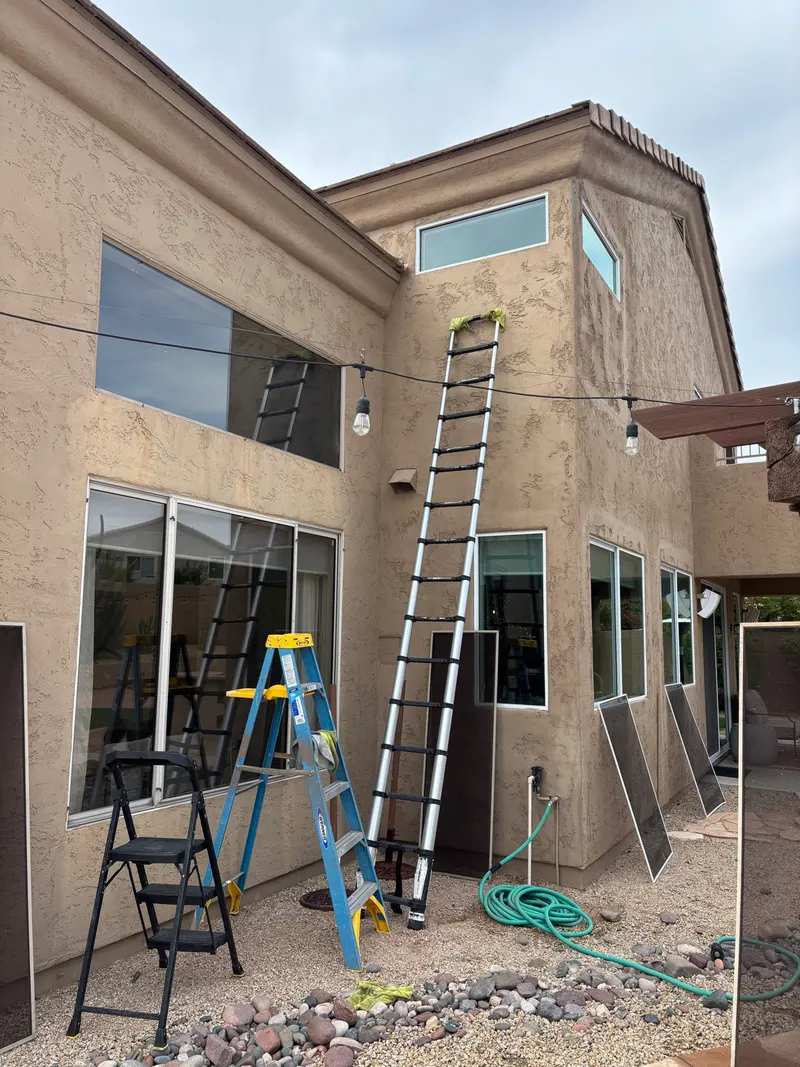
The better access plans all have the same shape, which is keeping weight off the tile. A ground mounted array needs no roof work at all. On a roof, the common approaches are working from a ladder set at the eave to reach the nearest rows, and using extension tools so a person can clean glass without standing next to it.
Where a crew does have to go up, the route is the thing to settle in advance. Steps belong where the tile is supported rather than out in the middle of a span, and the same path gets used each time instead of wandering across the field. A crew that has thought this through will describe the plan before starting rather than after.
None of that is an argument for going up yourself. Tile, a pitch, a film of dust that behaves like ball bearings underfoot and live electrical equipment make a poor combination for a homeowner on a weekend. Look from the ground, use the zoom on your phone, or read what the system monitoring already records. Our guide to how often panels need cleaning in Phoenix covers what is worth looking for from down there.
What should touch the glass
Panel glass is tough. The seals around the frame are less tough, and the surface is the part light has to get through, so the tools matter. Soft materials and water do the work on a normal dust layer. Baked on spots, usually bird droppings, get worked one at a time until they release.
Pressure washing is the method to rule out before any other conversation. High pressure can push water into places that are meant to stay dry and can mark the surface it is aimed at. Abrasive pads and household cleaners carry risks of their own, and the panel maker's instructions are the authority on all of it. If a cleaner cannot tell you what is in the bucket, you have learned something useful.
Camelback Window Cleaning's solar panel cleaning service clears dust, monsoon film and bird droppings from the panel face by hand, treats stubborn spots one at a time, wipes the frame edges where debris piles up, and follows the manufacturer's care guidance.
Questions to ask first
Most of the risk on a tile roof is settled in the few minutes before anyone sets a ladder. These are the questions that do the work.
- How will you reach the array, and will anyone walk on the tile to do it?
- If a tile breaks during the visit, who repairs it and how soon?
- What touches the panel face, and what is in the water you use?
- How are bird droppings and baked on spots handled?
- Does your method follow the care instructions from my panel manufacturer?
- Are you cleaning the glass only, or proposing work on wiring, rails or mounts?
That last question carries more weight than it looks. Washing glass and servicing an electrical system are separate trades with separate qualifications. A cleaner who starts talking about loosening panels or opening wiring has walked out of the job you were hiring for, and the right answer is to stop and call the installer.
Checking the roof afterward
A quick look from the ground on the same day is worth more than any assurance, and it takes a couple of minutes.
- Walk the perimeter of the house and look through the gravel and planters for tile chips.
- Check the valleys and the eave line from the ground for broken pieces.
- Scan the roofline for a tile sitting lower or out of line with the ones beside it.
- Watch ceilings and the tops of walls for a new stain over the following weeks.
Do it while it is still clear who was on the roof. A few photographs taken from the ground before the visit make the comparison simple and settle any question in one look instead of an argument.
Timing a tile roof visit
The cooler months are the easier season for this work in the Valley. Tile holds heat well into the evening, and a surface that has been in full sun since noon is harder on everyone than the same surface early in the morning. Asking for a cool part of the year or an early slot is ordinary scheduling, not a special favor.
The other half of timing is what has already landed up there. A long dry stretch leaves an even film of dust. A storm adds a muddy layer that dries into streaks along the lower edge of each panel. Anything sitting between the sun and the cells means less light reaching them, which our post on dirty panels and output works through in detail.
Pair it with the windows
If the panels and the glass are both due, one visit spares you a second crew in the driveway. The ladders are already out and the access is already worked out for height. Our notes on two story window cleaning explain how reach gets planned on a taller house, and the same thinking applies to a roof nobody should be strolling across.
Tile is a common roof covering across Valley neighborhoods, so the access question is worth settling before anybody climbs anything. If your home is in the East Valley, our Mesa window cleaning page covers what a visit includes there. A Camelback solar visit starts with an assessment of access and surface condition, and you can get instant quote with a few photos of the roofline and the array.
Key takeaways
- Tile is built to shed water, not to carry weight, so the access plan matters more than the cleaning method.
- A cracked tile can leak long after the visit, and broken chips can block the valleys that drain the roof.
- Keep weight off the tile where possible, by working from the eave, from extension tools or from the ground.
- Rule out pressure washing, abrasive pads and household cleaners, and follow the panel maker's instructions.
- Check the perimeter, the valleys and the roofline from the ground on the same day as the visit.