

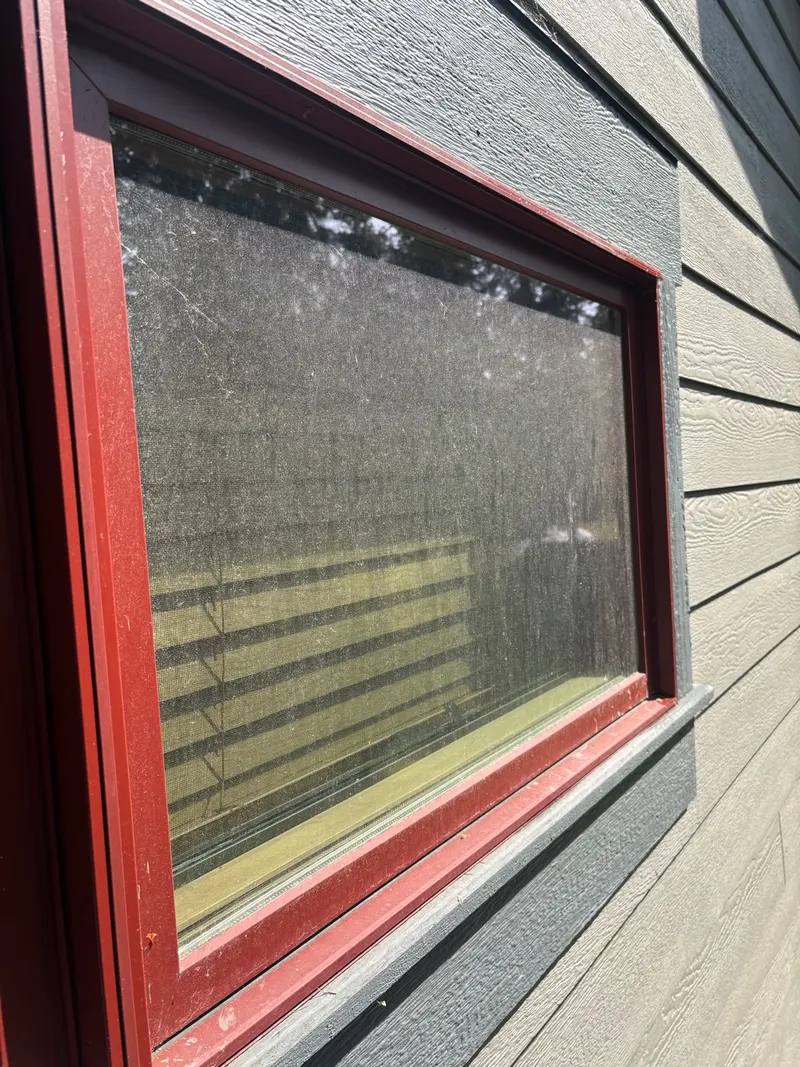
Which side is it on?
Start here, because the two kinds of film look identical from a chair and the fix is not the same. Outside glass in the Valley carries desert dust and dried sprinkler minerals. Inside glass carries something softer and oilier that the house produced itself.
The test takes a minute. Pick a pane where the haze shows, wipe one small square on the inside with a clean damp cloth, then step back and look again. If that square reads clear and the rest still looks dull, the film is on the inside. If it looks the same as everything around it, you have been looking through the outer face.
Then look at the cloth. A grey smear is household dust and lint. A tan smear that drags a little is oil, and oil is what makes interior film hold on. Our guide on residential window washing, inside, outside or both covers how the two faces get scheduled.
Most interior haze is the house's own oily film with household dust stuck into it.
What lands on inside glass
A window is a flat, vertical surface in a room full of moving air, which makes it a collector. Six things show up on it in most Valley homes.
- Household dust: skin, fabric fibres, carpet and bedding lint and paper dust, kept moving by the air handler and dropped wherever the air slows down.
- Desert dust that came in on shoes or through an open slider, then settled with everything else.
- Pet dander and hair, which shows along the bottom of a patio slider first.
- Cooking oil, carried through the house as a fine mist that lands sticky and holds whatever dust arrives after it.
- Soot from candles, a fireplace or anything else burning indoors, fine enough to find the glass and dark enough to show on it.
- Residue from the cleaner used last time, if too much went on or it dried before anyone wiped it off.
None of those is a problem on its own. The trouble is that they layer. Dust by itself comes off with a dry cloth. Dust that lands on an oily film bonds into it, and the next round lands on top of that. By the time a window reads hazy from across the room, the layer has structure, which is why a dry wipe pushes it around instead of lifting it.
Cooking, candles and smoke
The kitchen is the usual source, and the pattern gives it away. Kitchen windows go first, the ones across an open great room next, and bedrooms at the far end of the house last. If the haze grades across the floor plan like that, it is coming off the stove.
Frying and anything cooked in oil at high heat put the most into the air, and a range hood only catches what rises under it. The rest travels with the air in the house and settles on the first cool surface it meets. Glass qualifies.
Candles, a wood fire and smoking indoors leave soot instead, which behaves differently. Soot is dry and very fine, and it darkens a pane evenly rather than in a pattern. A room where candles burn through the holidays can pick up a visible layer in one season.
Why autumn shows it
The film builds all year. Late autumn is when people finally see it.
The sun sits lower after the equinox, so afternoon light comes in flat across south and west glass instead of down onto it. Flat light picks up every bit of film on the surface, the way a windshield looks fine at noon and blinds you at sunset. The pane did not change. The lighting did.
The season adds its own load. Doors and windows that stayed shut against the summer heat are mostly still shut, the heat runs on cool mornings and moves air through the house again, candles come out, and more cooking happens indoors for more people. Homes that sat closed while their owners were away get opened again around now, with months of settled dust on every flat surface.
Moisture on a cold pane
Desert air is dry, so condensation gets dismissed here, and it still happens indoors. A pane that has been cold all night, in a room where someone has been showering, cooking or running a humidifier, can hold moisture along its lower edge first thing in the morning.
That water does two things. It picks up whatever is sitting on the pane and carries it to the bottom, where it dries as a tide line that wiping the middle of the window will never fix. And moisture from a humidifier or an evaporative cooler fed with Valley tap water carries minerals that dry as white dust on the sill.
Mineral film on an interior pane is uncommon, and it behaves the way it does outside. Soap and water will not move a deposit. Our post on removing mineral deposits from glass covers what can be done about it.
How to clear interior film
Interior glass is less work than exterior glass and less forgiving, because everything that runs off the pane lands on something you own. The order below is most of the job.
- Lay a towel along the sill and on the floor first. Most of the mess from an interior clean ends up below the glass rather than on it.
- Go dry before you go wet. Lift the loose dust with a dry microfiber cloth or a vacuum brush, and do the frame, the sill and the track while you are there. Wetting a dusty pane only makes mud.
- Work the oily film in sections with a lightly damp cloth, a small square at a time, and follow it with a dry cloth before the first pass dries.
- Fold and swap cloths often. A loaded cloth stops lifting film and starts spreading it, which is where most interior streaking comes from.
- Finish at the edges and corners, where the film is heaviest. A cloth folded over one fingertip reaches what a flat hand skates past.
Work out of direct sun even indoors. A pane with afternoon light on it dries faster than you can finish it, which leaves the streaks you were trying to remove. Our post on cleaning windows without streaks in Arizona sun covers the timing.
When it is not film
Some haze will not come off at any amount of effort. Telling the difference early saves an afternoon.
- Haze between the panes. A failed seal on a double pane unit lets moisture into the sealed gap, where no cleaning reaches it. It often shows as a cloudy patch that shifts through the day, and the glass unit has to be replaced.
- Fine scratches. They show as faint arcs running the way someone once wiped, usually a dry cloth dragged over gritty glass. They light up in the same low sun that shows film, and they stay put.
- Etched glass, where water sat on the surface long enough to attack it. Etching can be improved and it will not clean off, because the damage is in the glass itself.
- A coating doing its job. Low emissivity glass can read faintly tinted or slightly cloudy from certain angles, which is the coating rather than dirt.
What to ask for
If the film has been building for a few seasons, or the worst of it sits on tall glass over a stairwell, one thorough interior clean resets the baseline and the rest is upkeep. Say what you are dealing with when you ask for a quote: which rooms look worst, whether any glass is tinted or coated, whether a humidifier or an evaporative cooler runs in the house, and how high the worst panes sit.
Photos taken from inside the room are enough to work from, and late afternoon light shows the film better than anything else will.
Camelback Window Cleaning does interior window cleaning with shoe covers and drop cloths, and exterior window cleaning covers every pane, frame and ledge, so both faces get finished in one visit. Local detail for the East Valley is on the Chandler window cleaning page.
The crew texts before arriving, and hours are Monday through Saturday, 7:00 am to 5:00 pm. When you know which rooms you want covered, get instant quote with a photo or two taken in low afternoon light.
Key takeaways
- Interior haze is oily film from the house with household dust bound into it.
- Wipe one small square on the inside to find out which face is actually dirty.
- Kitchens load the nearest windows first, so the pattern points at the source.
- Low autumn light is what finally makes a film that built up all year visible.
- Haze between the panes is a failed seal, and no cleaning will ever reach it.