

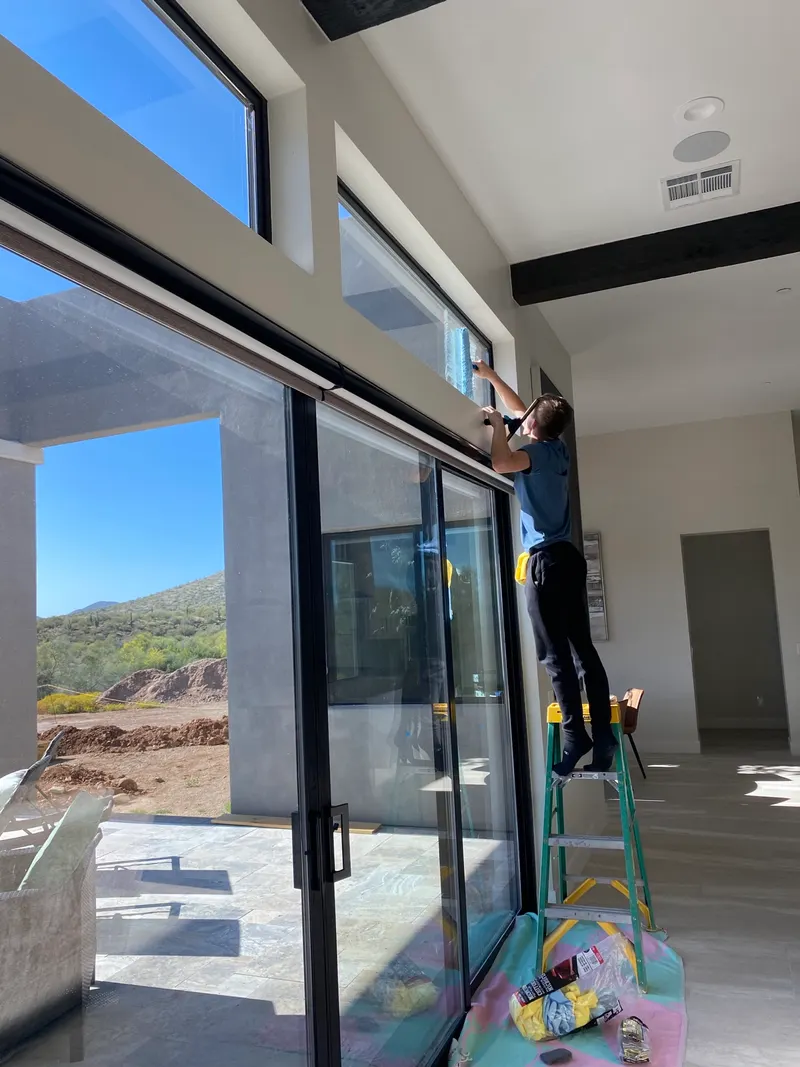
Wait for the last trade
The timing question is about sequence rather than a number of days on a calendar. Glass gets dirty again every time a tool comes back out, so the clean belongs after the work that makes dust, not after the work that makes noise. Flooring, tile, drywall sanding, stucco patching and paint are the ones that matter.
Ask your contractor which trades are still coming back. Punch list days are easy to forget, and a painter returning for touch-ups will leave a fine mist on the nearest pane. Once the last of those visits is on the calendar, book the glass for the week after it.
Dust that has settled inside a lived-in house does not stay where it landed.
Why dust keeps falling
A remodel in an occupied house spreads further than the room it happens in. Fine particles ride the air into hallways and bedrooms, settle on ledges, door tops and ceiling fans, and come down again days later when the air handler runs or somebody walks through.
Glass cleaned on the last day of work often looks hazy again by the weekend for that reason. The dust in the air has landed. The dust on every horizontal surface in the house has not finished moving.
Changing the air filter, running the system for a day, wiping high ledges and vacuuming all shorten that tail. Our guide to preparing for a window cleaning visit covers the rest of what helps before the crew arrives.
The contractor's clean
Most remodel contracts include a final clean, and most final cleans are lighter on glass than homeowners expect. A crew may go over the panes with a cloth and a spray bottle, which moves construction dust around on a surface that is already holding grit.
Ask what that final clean covers before you assume the windows are in it. If the answer is a wipe, treat the glass as a separate job and schedule it once the contractor's crew has packed up and taken the debris away.
Protecting new glass
Construction dust is mostly mineral. Drywall, mortar, tile and stucco break down into hard particles, and dragging a dry cloth across them grinds them into the surface. Scratches that show up after a remodel usually came from the cleaning rather than from the building work.
A pane gets flooded with water first so the grit floats off, then worked with a soft tool, then pulled dry. Anything stuck to the glass is softened and lifted at an angle instead of being scraped flat across it. Post-construction window cleaning is the version of a window visit built around that order of work.
More than dust
Walk the house in low morning light before you book and look along the glass at an angle. Most remodels leave some mix of the following.
- Paint and primer mist on panes near anything that was sprayed or rolled.
- Grout haze and thinset splatter on glass close to new tile.
- Stucco and mortar specks on exterior panes under a patched wall.
- Adhesive lines where plastic sheeting or masking tape met the frame.
- Manufacturer stickers on any window or door replaced during the work.
- Drywall dust packed into the tracks, the weep holes and the screen mesh.
Tracks, screens and sills
Fine powder falls into every channel it can find. It settles into the bottom track of every slider and low window, and the first time water reaches it the powder turns into a paste that dries hard in the channel. A door that moved easily in September starts to drag once that happens, which is the problem behind sticking tracks and sliders.
Screens take their share too. Mesh holds construction dust well, so a screen that goes back on dirty puts all of it straight back on a clean pane with the next breeze. Screens come off, get washed and go back on as part of screens, tracks and sills, and that is the part of a remodel clean people most often leave out.
A sensible order
Running the end of a remodel in this order keeps the glass from being done twice.
- Finish the dusty trades, including touch-up paint and any punch list visits.
- Let the contractor's crew do their final clean and haul the debris out.
- Change the air filter, run the system, then wipe high ledges and vacuum.
- Put the furniture and the window coverings back where they belong.
- Book the window clean, inside and out, with tracks and screens in the scope.
Booking the visit
Tell the cleaner what the work was. A kitchen remodel, a bathroom tile job and a whole-house repaint leave different things on the glass, and the plan changes when the crew knows a window was replaced or a wall was patched. Photographs of the worst panes say more than a description does.
Say which rooms are back in use and which are still stacked with boxes, so the visit is planned around what can actually be reached. Inside work goes ahead with shoe covers and drop cloths down, and a text comes before the crew arrives. Interior window cleaning describes that side of a visit in full.
Camelback Window Cleaning works Monday through Saturday across the Valley, including window cleaning in Chandler, where older homes near the historic square and newer stucco builds both see their share of remodel work. Our guide to what post-construction window cleaning removes goes further into the residues themselves. Send photos of the worst panes with the instant quote form and say when your last trade finishes. Post-construction cleaning for new or remodeled homes is also available for window cleaning in Scottsdale, window cleaning in Paradise Valley and window cleaning in Cave Creek and Carefree.
Key takeaways
- Time the window clean to the last dusty trade, not to the day the work stops.
- Dust that settled during a remodel keeps coming down for days after the noise ends.
- Ask what the contractor's final clean covers before you assume the glass is in it.
- Construction dust is hard and gritty, so dry wiping a dusty pane is what scratches it.
- Put tracks, weep holes and screens in the scope, because they hold the most dust.