

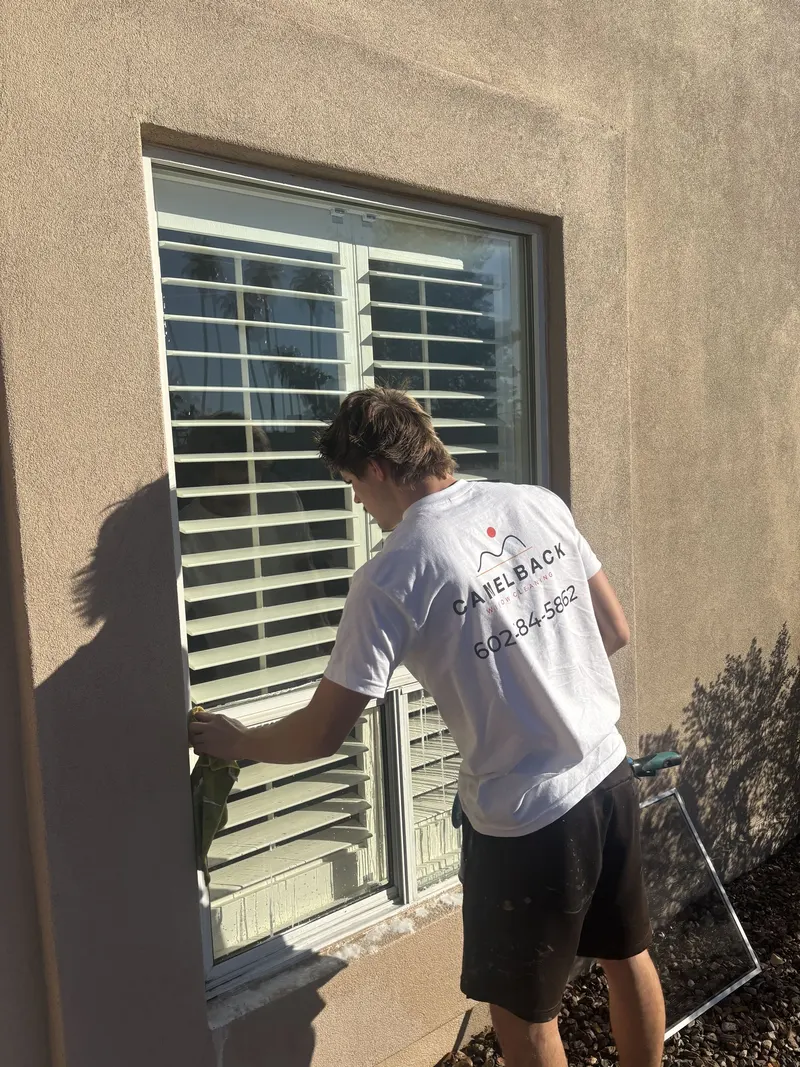
Why they go together
A window is three parts and all three get dirty: the glass, the screen in front of it and the track or ledge underneath. Clean one and leave the other two and the house goes back to looking the way it did a few weeks later. In the Valley that happens faster than most people expect, because the same fine dust is landing on all three at once.
Screens are the part most people leave in place. Mesh sits about a finger's width from the pane, and it holds dust the way a filter does. Wash the glass with a loaded screen still in the opening and the next breeze through it carries some of that dust back onto the pane. The glass is not dirty again in the way it was before, but the first thing you see through it is haze.
There is a simpler reason too. A squeegee cannot reach the outer face of the glass through mesh. Any exterior clean that leaves the screens in is working on part of the window and guessing at the rest, which is why screens, tracks and sills is treated as its own piece of work rather than a finishing touch.
A clean pane behind a dusty screen does not stay clean for long.
What the mesh holds
Desert dust is the main load. It is fine enough to sit in the weave instead of falling through it, so a screen can look clean from inside the house and still be carrying a full layer. The test takes a second: lift the screen out and hold it up against the sky. If the mesh reads dark and even rather than open, that is dust.
Pollen does the same thing in spring, and lint and insect debris collect along the bottom rail where the frame catches them. Screens within range of a sprinkler head pick up a third thing. Spray that dries on mesh leaves the same minerals behind that it leaves on glass, which shows up as a pale film on the weave and a ring of spots on the pane behind it. Washing lifts the film off the mesh. The deposit on the glass is a separate job, and our post on removing mineral deposits from glass goes through what will and will not come off.
Houses on the north side of the Valley tend to load up quicker. North Phoenix and Anthem back onto open desert and still have graded lots and unpaved shoulders between the subdivisions, so there is loose material close by whenever the wind comes up. Cave Creek and Carefree homes sit at the edge of open desert and load up the same way, so screens are worth naming in the written scope for window cleaning in Cave Creek and Carefree.
The order the work runs in
Sequence matters more than technique here. Most of the complaints about a window cleaning that did not last come down to work done in the wrong order rather than work done badly.
- Screens come out first. Each one gets set in order or marked so it goes back into the opening it came from, because screens are cut to their own opening and are not interchangeable.
- Tracks and sills get cleared next, while the openings are empty. Grit comes out far more easily with nothing sitting in the channel.
- Then the glass gets washed, with the frames and the ledges wiped, working from the upper panes down so nothing drips onto finished work.
- Screens get washed away from the house, on a surface that will not scuff the frame, then left to drain and dry fully.
- Last, the screens go back in, and every window and slider gets pushed once to confirm it moves the way it should.
The step people skip at home is the drying. Mesh that goes back damp traps water against the frame and the glass, and dust landing on a wet screen sticks to it instead of blowing off. A screen refitted too early can leave a mark of every drop still on it.
What the empty opening shows
Taking the screens out is the only time anyone gets a clear look at the parts of a window that are normally hidden. Stretched mesh, a bent frame or a corner that has pulled apart turns up on the driveway, not in the opening. So does a cracked pane at the edge, a failed seal or a weep hole packed with dust.
The track is the one worth caring about. Grit in a slider channel is what wears the rollers down, and in a house with a big patio door that door moves more than any window in the place. Our post on window tracks and sliders that stick covers what is actually in there. Clearing the track while the screen is out costs nothing extra in effort and is most of the reason a door starts gliding again.
Doing it yourself
Ground-floor screens are a reasonable weekend job. Mild soap, a soft brush and a hose will do it, and our guide on how to clean window screens covers the method and the mistakes that put a hole in the mesh. The thing worth copying from a professional visit is the order, not the equipment.
Two habits undo the work. One is washing the glass first and the screens afterwards, which puts spray and loosened dust onto panes that were already finished. The other is pressure washing the mesh, which stretches the weave and pushes it out of the frame. A screen that has gone slack will rattle in wind and never sit flat again.
Upper-floor screens are a different question and the answer is usually to leave them. The problem is the ladder footing rather than the washing, and a screen is awkward to carry down one-handed. Note which ones you want done and have them handled with the glass.
What to ask for
Scope is where quotes differ, and screens are the line item most often left vague. Ask directly:
- Are screens removed and washed, or brushed in place while they stay in the opening?
- Are the tracks and sills cleared while the openings are empty?
- What happens if a screen is found bent, slack or torn, and who decides what to do about it?
- Is the interior glass part of the same visit, or a separate one?
- Does the written scope name the screen and track work, or only the glass?
It helps to say what you have before anyone comes out. How many screens are in the house, whether any sit in fixed or high openings, and whether a sprinkler zone throws onto a window, so nobody cleans a pane while that zone is running. Photos from the ground are enough to work from.
Camelback Window Cleaning removes screens, washes them and reinstalls them, and clears the tracks so sliders glide. Exterior window cleaning covers every pane, frame and ledge, interior window cleaning is done with shoe covers and drop cloths, and maintenance plans exist for people who would rather not track the timing themselves. Local detail for the north side is on the North Phoenix and Anthem window cleaning page.
The crew texts before arriving, and hours are Monday through Saturday, 7:00 am to 5:00 pm. When you know which openings you want covered, get instant quote with a photo or two of the glass and the screens.
Key takeaways
- The glass, the screen and the track all get dirty from the same desert dust.
- Screens have to come out for the outer face of the glass to be reached at all.
- An empty opening is the right moment to clear the track and the sill.
- Mesh that goes back damp holds a mark of every drop left on it.
- Ask whether screens are removed and washed or only brushed in place.